
Squash court system
Single-Joist Sports Wood Flooring System
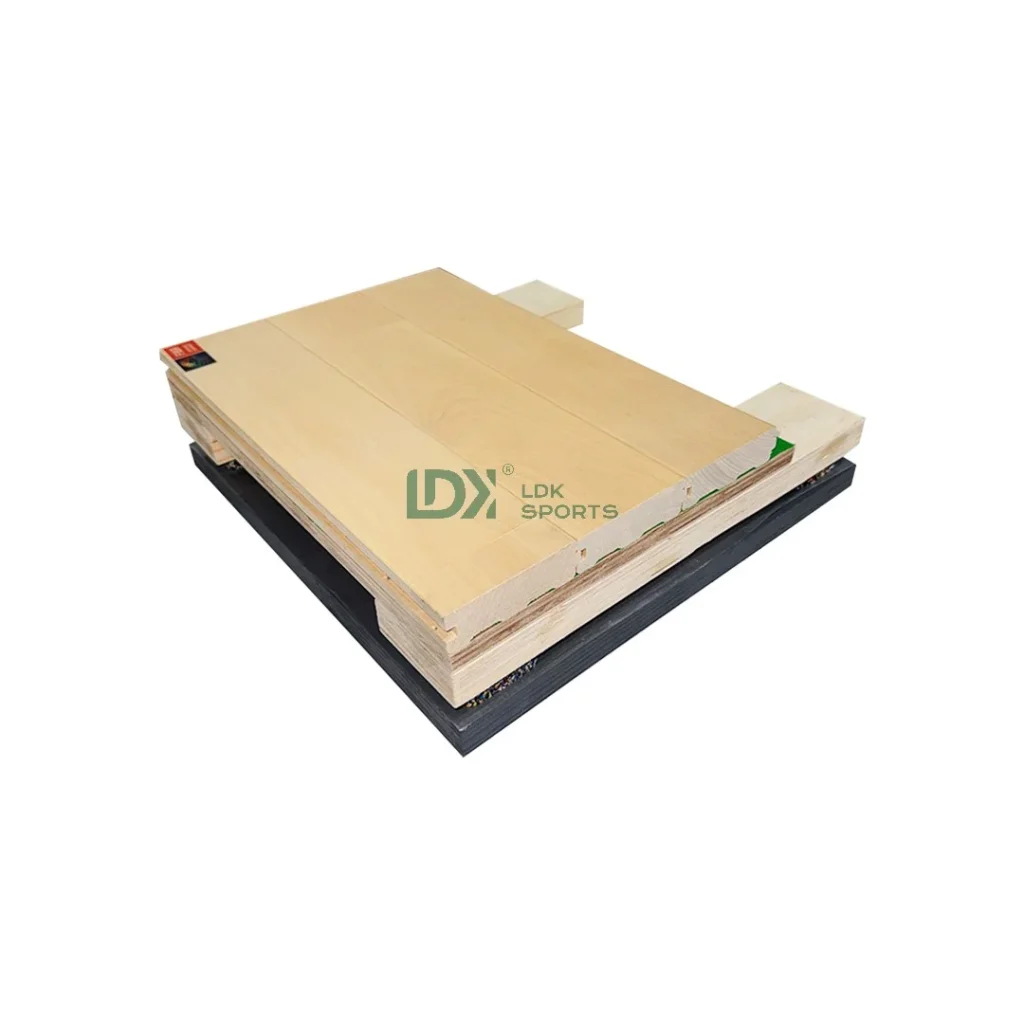
Area-elastic maple sports wood flooring on 24 mm LVL joists and 12 mm resilient pads, specified for squash courts and multi-sport halls. Model LDK25W01.
Product information
Specification at a glance
Single-joist maple sports floor with 24 mm LVL joists and 12 mm resilient pads
Model
LDK25W01
System type
Single-joist area-elastic sports wood flooring
Surface
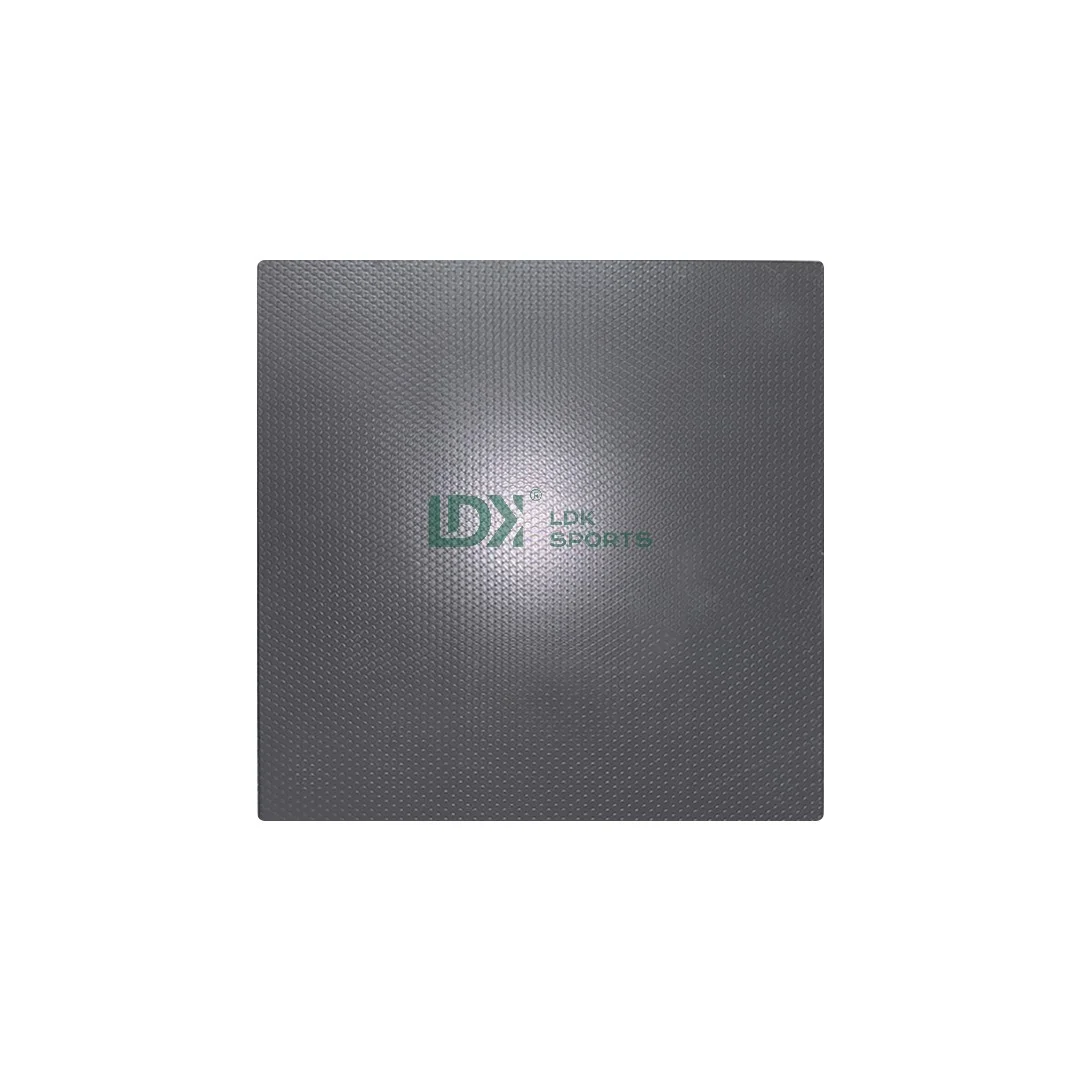
22 mm maple sports panel with factory sports coating
Substructure
24 mm LVL joists on 12 mm shock-absorbing pads
Application
Competition and professional training floors
Fits
Squash courts and multi-sport indoor halls
Key features
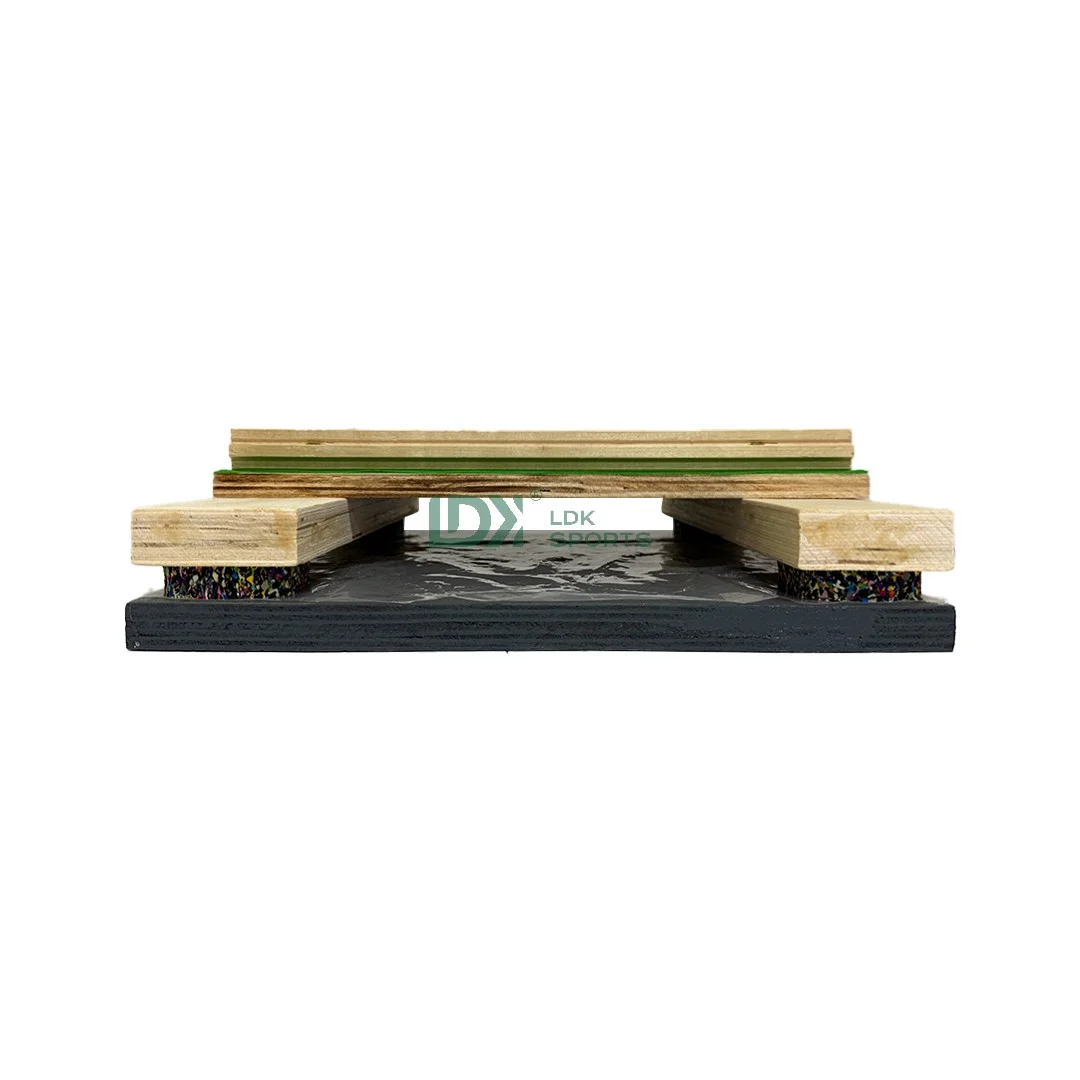
Single-joist construction with 24 mm LVL joists for dimensional stability under long-term load 22 mm maple sports surface panel with factory-applied professional sports coating 12 mm resilient shock-absorbing pads for consistent ball response and joint protection 12 mm load-bearing plywood panel distributing point loads across the joist grid Non-woven separation layer for moisture resistance, sound absorption and noise reduction Polyethylene moisture barrier protecting the assembly from sub-floor humidity Suited to competition and professional training loads, including multi-court halls
Technical information
Layer schedule
| Surface panel | 22 mm maple sports flooring panel (birch plywood core) |
|---|---|
| Non-woven fabric | Moisture resistance, sound absorption and noise reduction |
| Load-bearing panel | 12 mm high-strength laminated plywood |
| Joist | 24 mm LVL joists, high strength and dimensional stability |
| Resilient pads | 12 mm professional shock-absorbing pads |
| Moisture barrier | Polyethylene moisture-proof film |
| Finish | Professional sports flooring coating |
| Application | Competition or professional training |
Installation and care
Confirm slab flatness, moisture content and finished floor height before ordering. Allow panels to acclimatise on site before installation. Keep expansion gaps at the perimeter and around fixed sports equipment. Apply court markings and finish coats after the floor has settled. Maintain 40–60% relative humidity and avoid standing water on the surface.
Sports floor system
Single-Joist Sports Wood Flooring System
An area-elastic maple floor built on 24 mm LVL joists and 12 mm resilient pads, specified for squash courts where ball response, shock absorption and long-term dimensional stability decide the playing experience.
Overview
A squash court floor is not a decorative surface laid over a slab. The ball rebounds off it, players plant and twist on it, and the court above it holds a known humidity for years. The single-joist system answers those three conditions with a maple wear surface, a laminated load-bearing panel and a joist grid that floats on resilient pads instead of being fixed down.
Product gallery
The floor system in detail
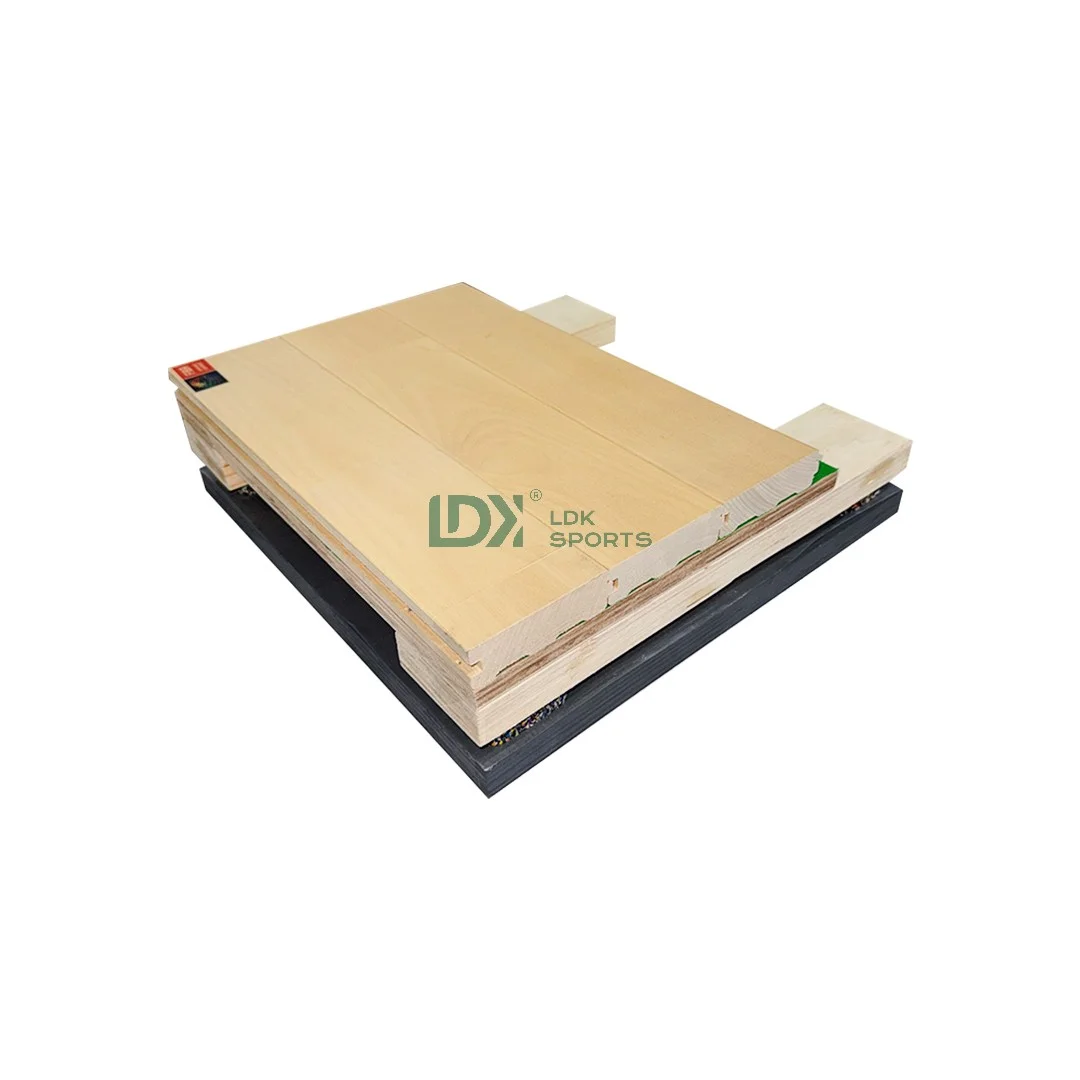
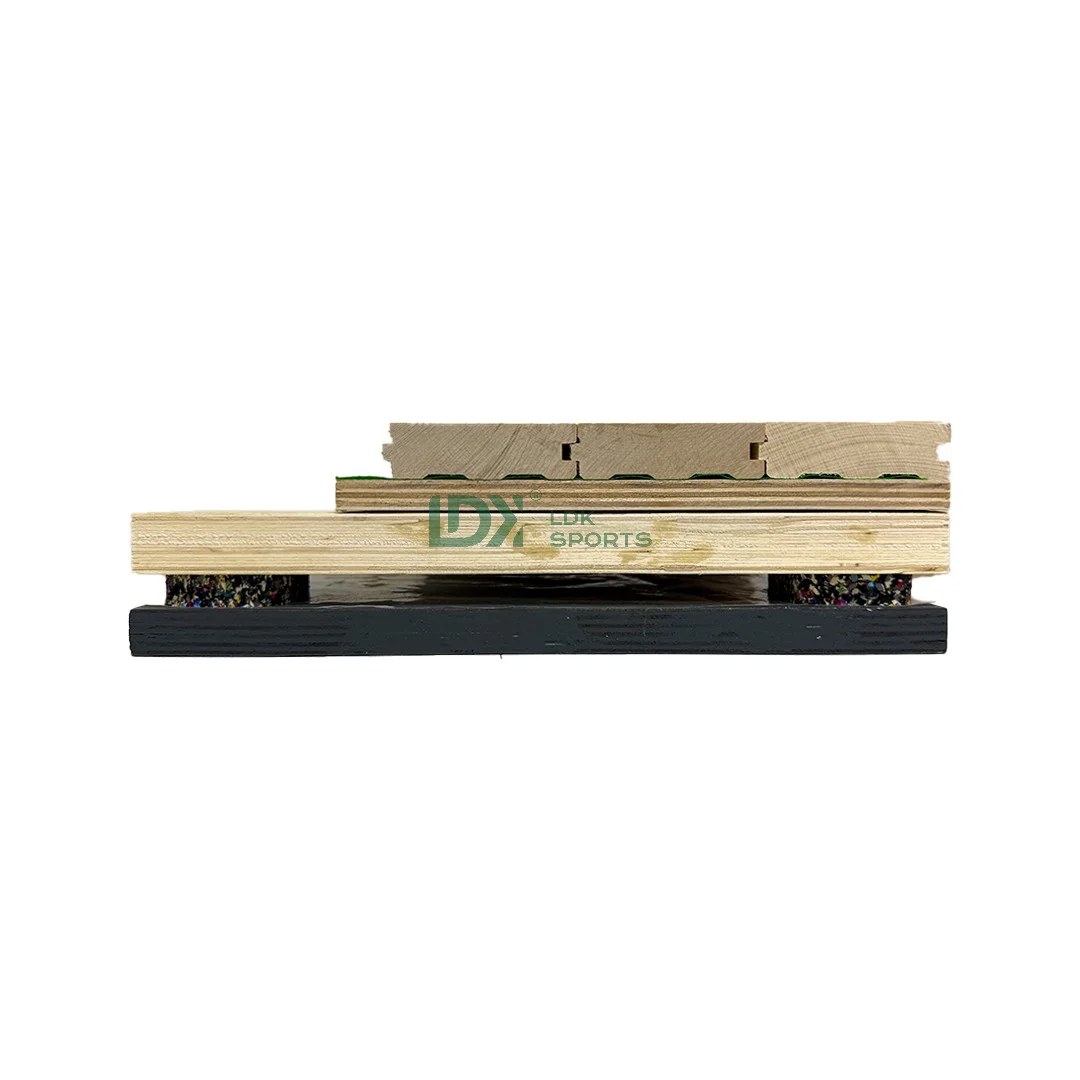
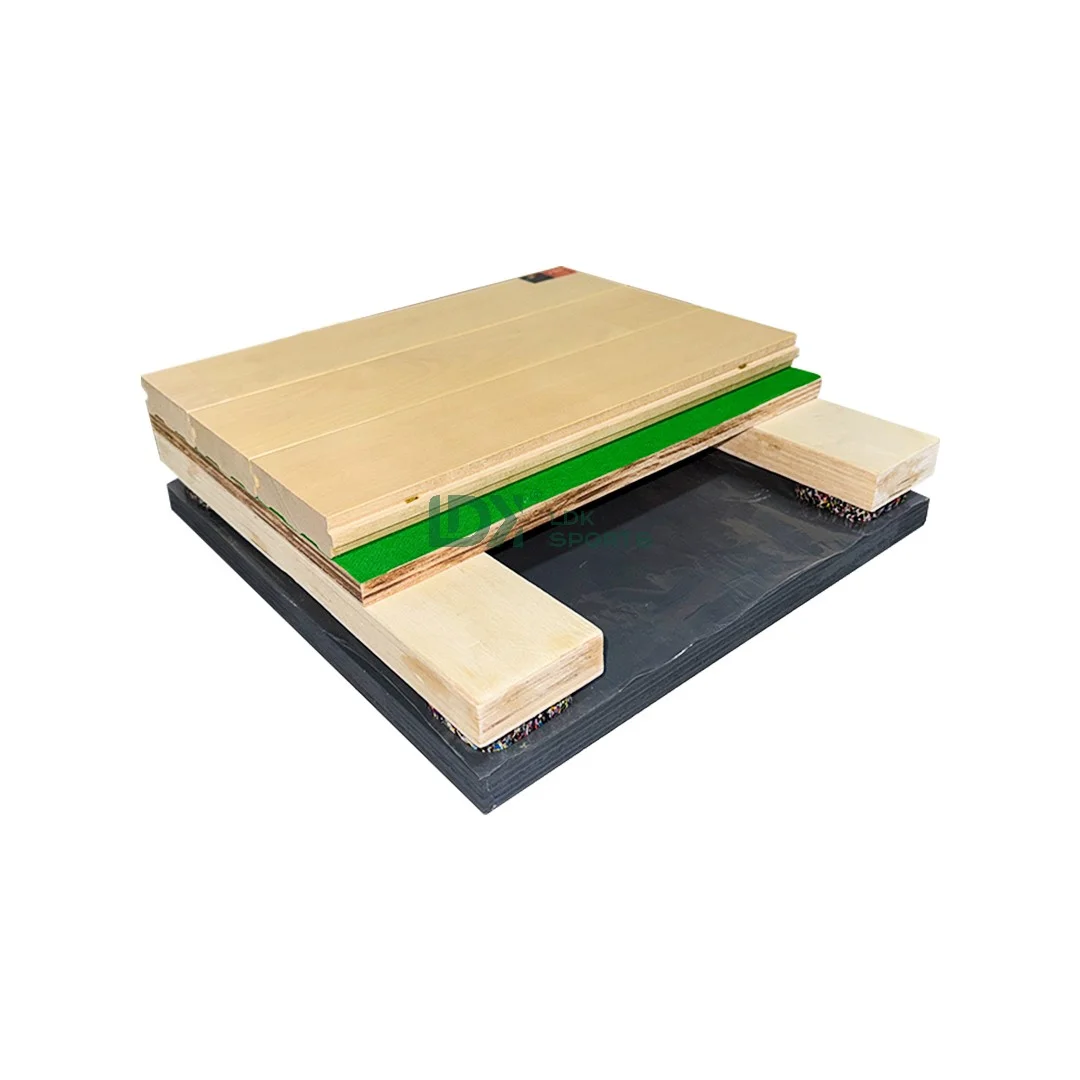
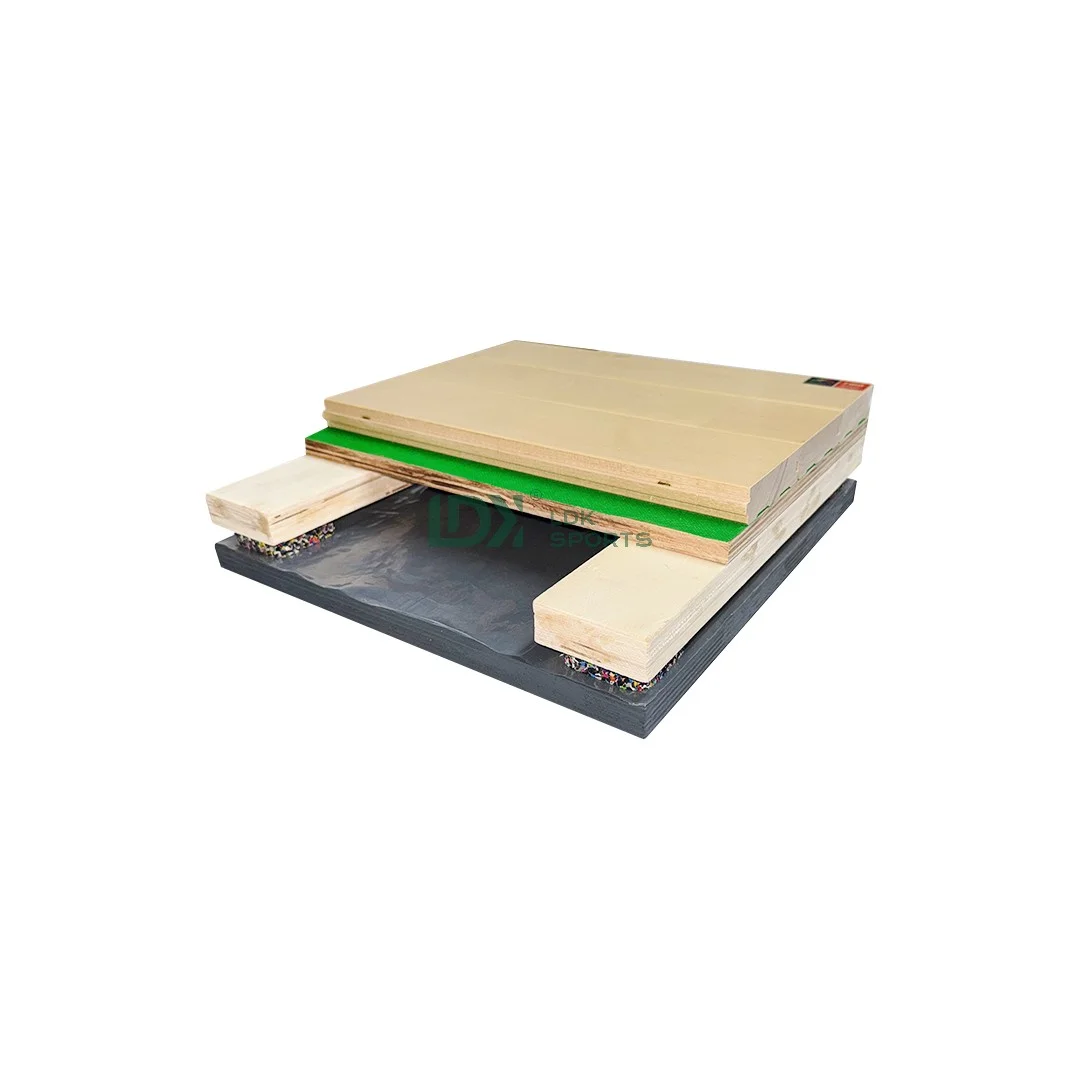
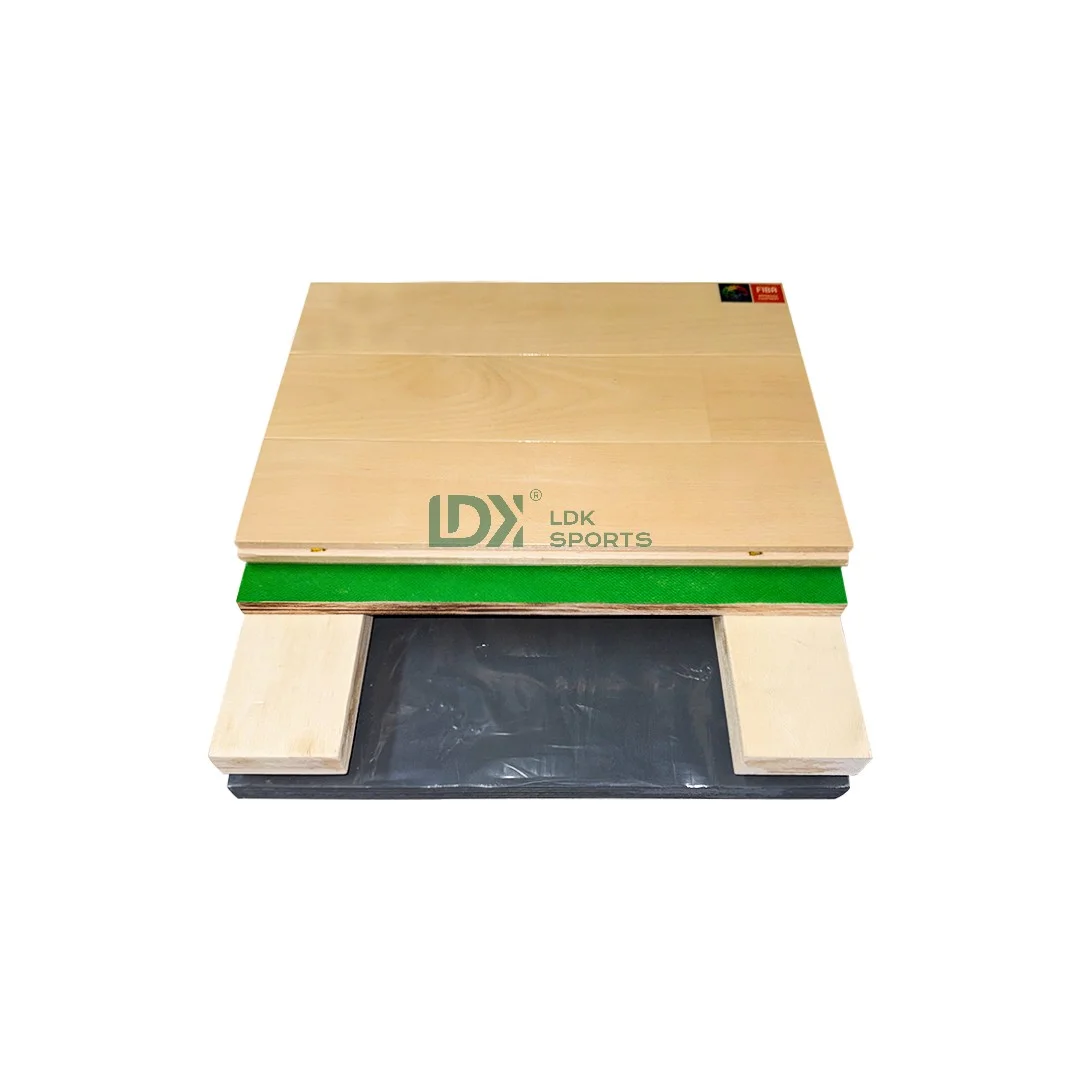
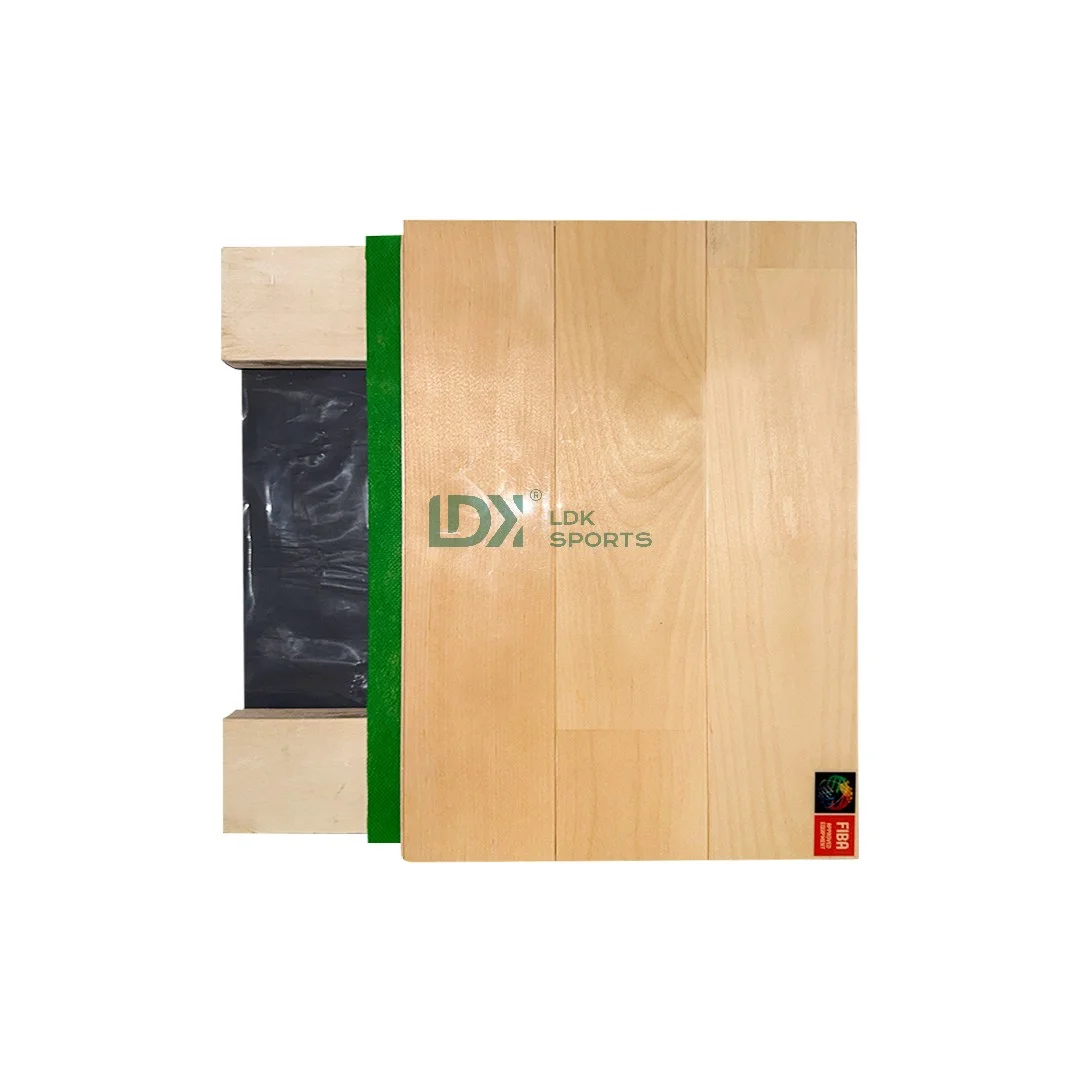
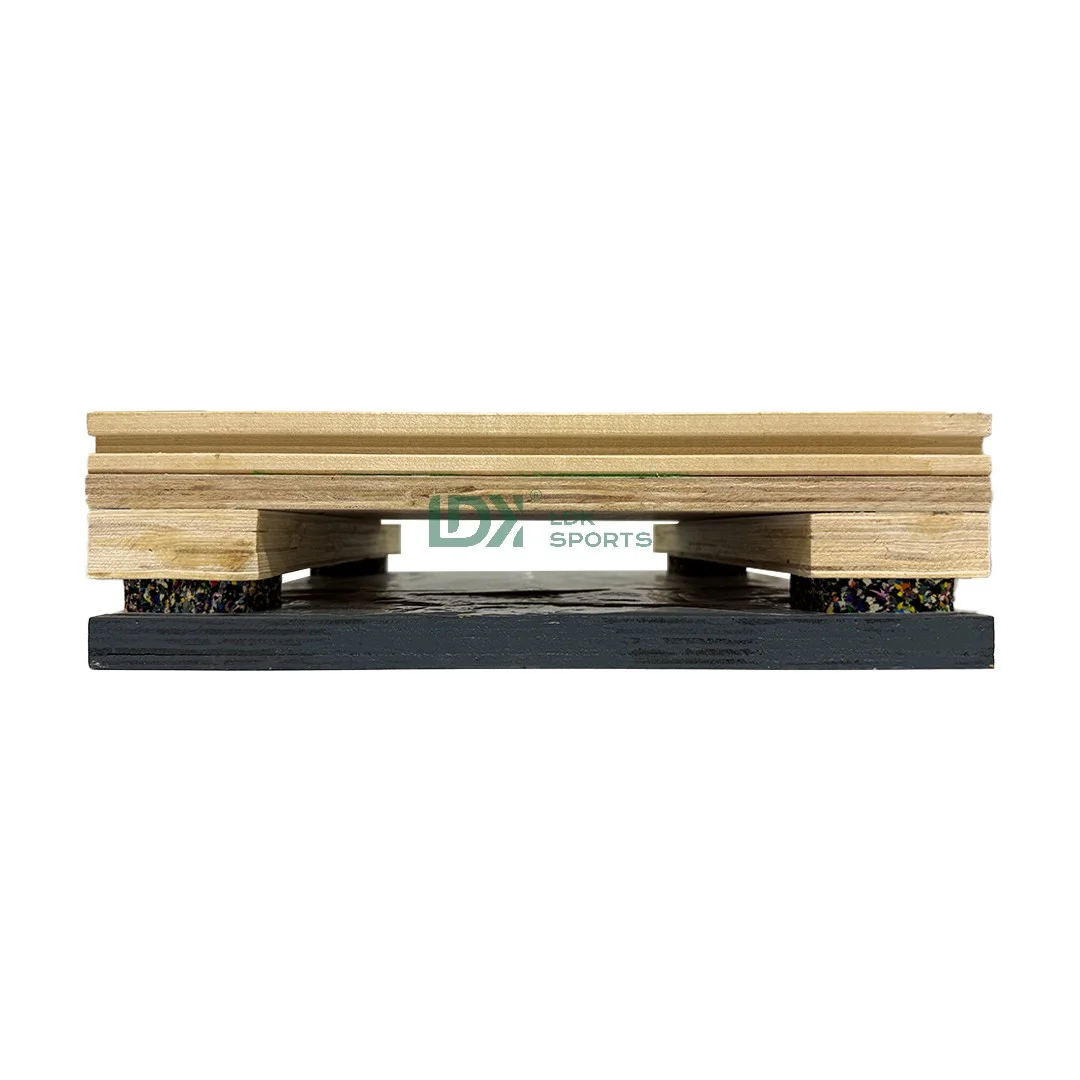
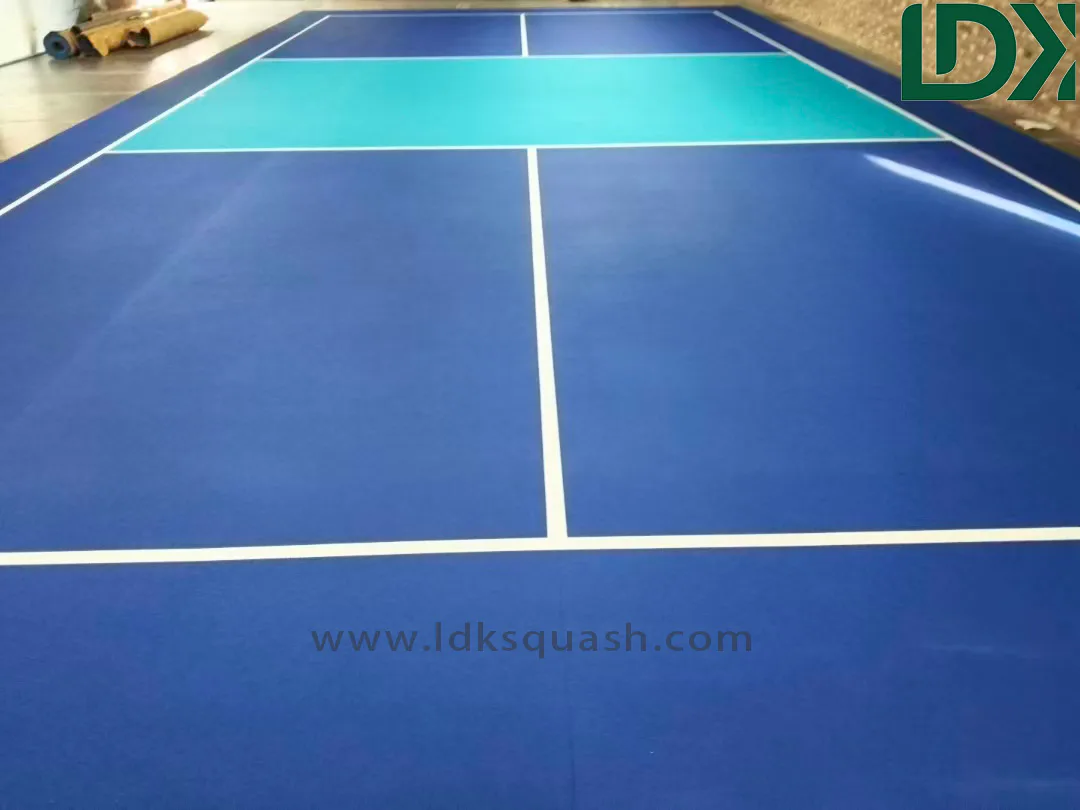
Nine views of the same assembly: the finished court surface, the layer schedule and the joist-and-pad build-up. Click any image to open it full size.
What “area-elastic” means in daily play
The floor deflects locally under a player and returns, rather than transferring the impact into the slab. Twelve millimetre pads under each joist set the response; the joist spacing and the laminated panel decide how evenly that response is shared across the court. The result is a surface that stays predictable in the corners and along the walls, which is where most amateur and professional injuries happen.
Because the assembly is dry-laid and mechanically fixed rather than glued to the concrete, it can be levelled, adjusted and — where the building programme requires it — partially disassembled. That matters in multi-sport halls, where the floor has to carry a basketball or badminton session on the same day.
How the build-up works, layer by layer
Each layer does one job. Read from the top down:
- 22 mm maple surface panel — the playing surface. Maple holds a consistent grain, takes court markings cleanly and resists indentation from ball impact and footwear.
- Non-woven fabric layer — separates the panel from the load-bearing board, adds moisture resistance and takes the high-frequency noise out of the assembly.
- 12 mm load-bearing plywood — spreads point loads from a single joist to its neighbours, so the court behaves as one plane rather than a series of strips.
- 24 mm LVL joists — engineered veneer lumber: straighter and more dimensionally stable than sawn timber of the same depth, which keeps the floor flat over a long service life.
- 12 mm resilient pads — the elastic element. They sit under the joists at a set spacing and can be shimmed to level the floor over an uneven slab.
- Polyethylene moisture barrier — a continuous film between the pads and the slab, isolating the timber from rising damp.
The factory-applied sports coating finishes the system. It is a sealer and a wear layer at once, which is why the court does not need a site-applied lacquer cycle before the first session — although markings and a final coat are still added after installation.
Where this system suits a project
Single-joist floors are the working standard for squash clubs, school sports halls, university courts and training centres. The same assembly is used in multi-court facilities where several courts share a slab and must feel identical to play on. It is also the natural upgrade path for a renovation where the existing slab is sound but the old surface has failed.
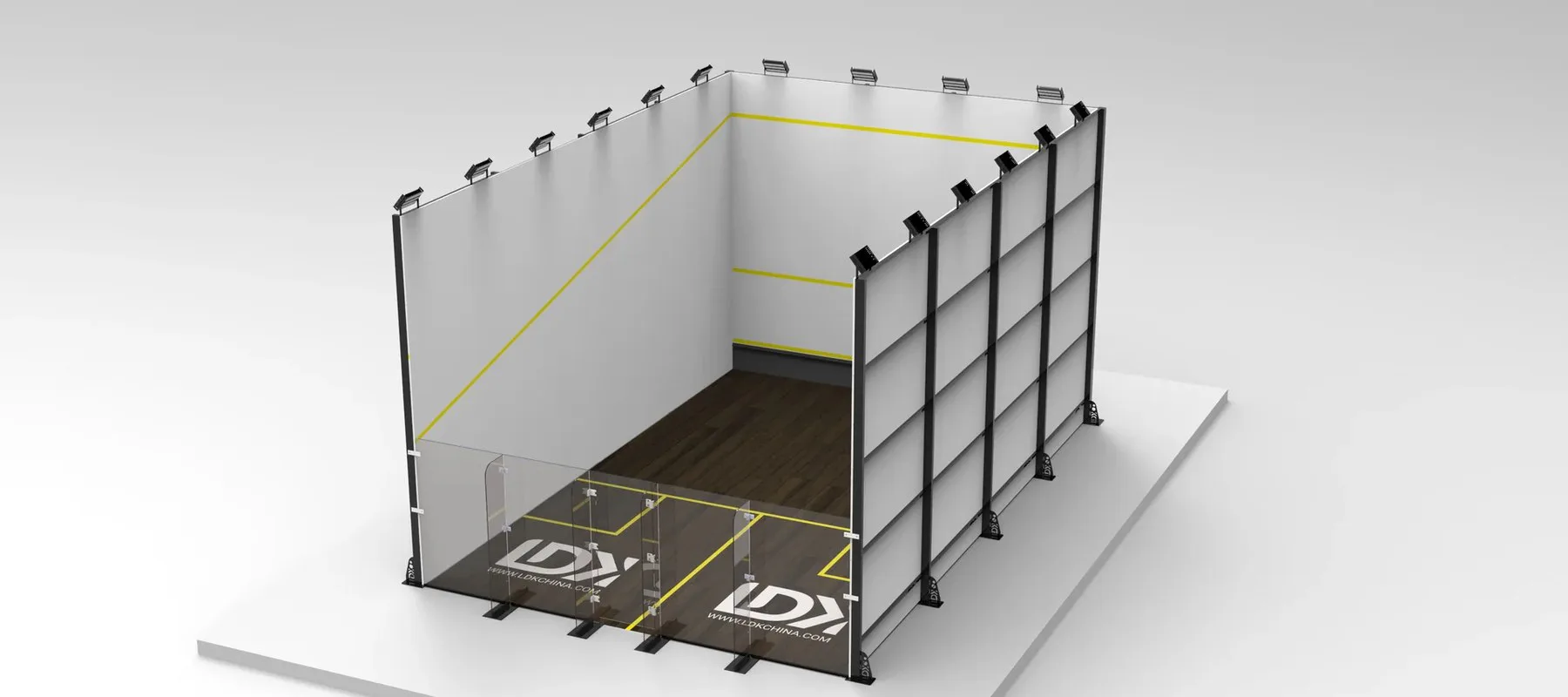
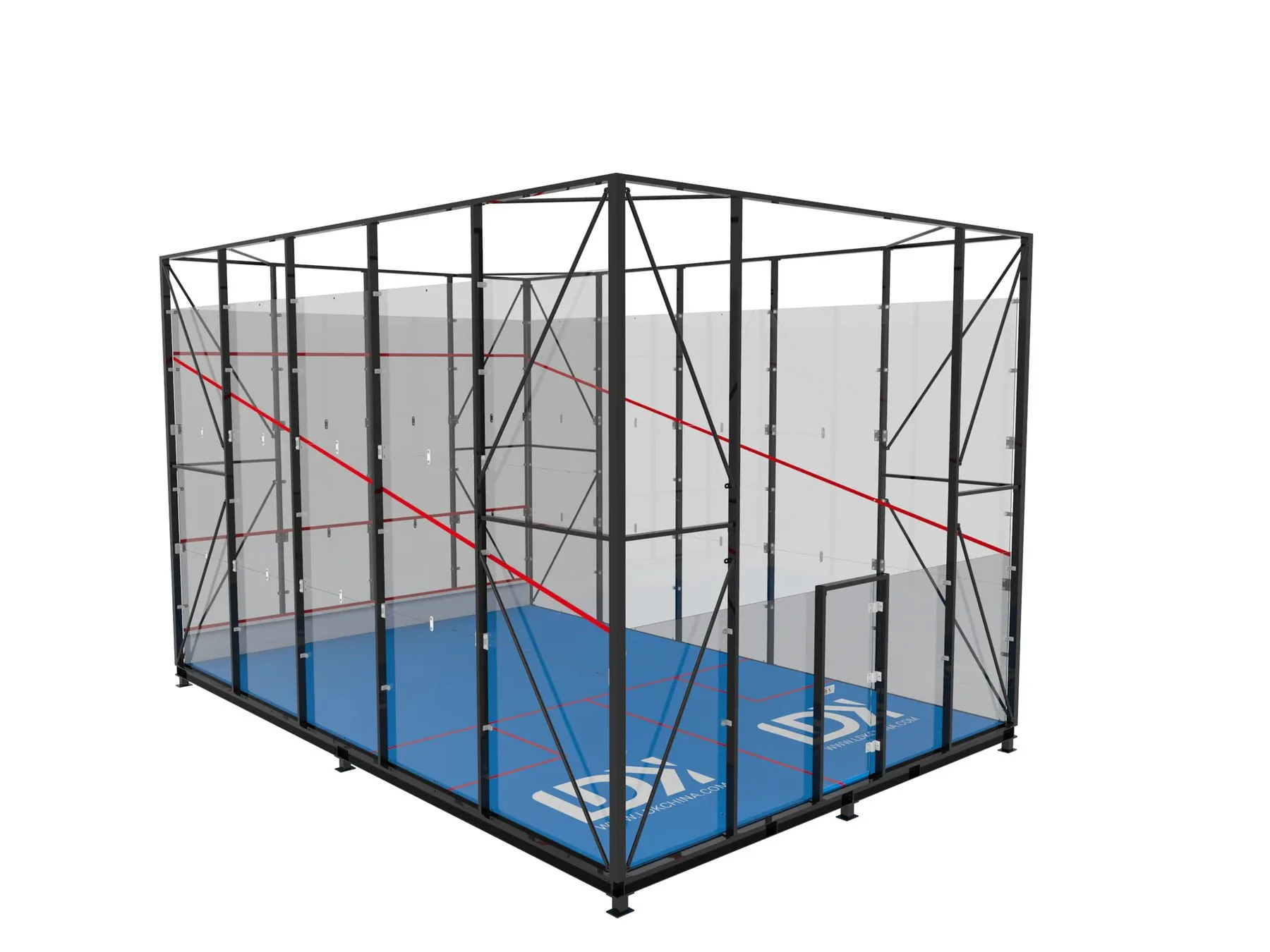
For a venue that switches between squash and basketball, the floor is only one half of the brief — the wall and glass system decides the rest. Compare the court system directions before fixing the floor specification, or read the renovation route if the court already exists.
Questions buyers ask
Sports wood flooring FAQ
What is a single-joist sports floor?
A floor where one layer of joists carries the playing panels. The joists rest on resilient pads rather than being fixed to the slab, which gives the court its area-elastic response. It is the most common build-up for squash and multi-sport timber floors.
How thick is the finished floor?
The structural layers add up to roughly 70 mm before the moisture barrier and any levelling build-up: 22 mm surface, 12 mm load-bearing panel, 24 mm joist and 12 mm pad. The exact finished height is confirmed against the door thresholds, wall base and neighbouring floor levels on your drawings.
Can it be installed over an existing concrete slab?
Yes, provided the slab is dry, structurally sound and flat within the tolerance agreed for the project. The pad-and-joist assembly can absorb small irregularities; larger deviations are corrected with a levelling layer before the floor is laid.
Maple or birch — what is actually on the surface?
The wear surface is maple sports flooring. The panel beneath it uses a birch plywood core, which is where the “birch” reference in supplier documentation comes from. The two descriptions refer to different layers of the same board.
Does the floor need re-sanding and re-coating?
Not on delivery — the sports coating is factory applied. Over a service life, a court is usually screened and re-coated according to traffic. Club courts typically revisit the finish every few years; heavy training venues sooner.
Related systems
Pair the floor with the right court
Specify the floor
Send the court size and we will return a floor schedule
Tell us the court dimensions, the slab condition and whether the hall will host more than one sport. We will confirm the layer schedule, the finished floor height and the installation sequence before any material is ordered.