Squash Rules for Beginners: Scoring, Serving, Lets & Strokes Explained

New to squash? The basic rules are simple: every rally is worth one point, games normally go to 11, and players must hit the ball to the front wall above the tin and below the out line. This beginner-friendly guide explains scoring, serving, legal returns, lets, strokes and common calls before your first game.
These explanations summarize the core principles of the current World Squash singles rules. For official competition decisions, always follow the referee and the latest rules published by World Squash Officiating.
Squash Rules in 30 Seconds
- A game is normally played to 11 points.
- Every rally scores one point.
- The rally winner serves next.
- The ball must reach the front wall above the tin and below the out line.
- The ball must be hit before its second bounce.
- A let replays the rally; a stroke awards the rally.
For anyone planning a squash court at a club, gym, hotel, school or private facility, understanding the rules is also useful when evaluating court layout, wall performance, flooring and player safety. LDK Squash supplies squash court systems for different venue and project needs.
How to Play Squash: The Basic Objective
Two players share a four-walled court and take turns hitting the ball. Your goal is to hit the ball to the front wall in a way that your opponent cannot return before it bounces twice.
After the ball leaves your racket, it may touch the side wall or back wall before reaching the front wall, but it must eventually hit the front wall above the tin and below the out line. Players usually try to send the ball deep into a back corner or close to a side wall, making the next shot difficult to reach.
2. How Scoring Works
Squash uses point-a-rally scoring. That means every rally produces one point, regardless of who served.
- The player who wins the rally scores one point.
- The rally winner serves the next rally.
- A game is normally played to 11 points.
- At 10–10, play continues until one player leads by two points, such as 12–10 or 15–13.
- A match is commonly best of five games, although best of three is also used.
There is normally a short break between games. During a friendly match, agree on the number of games and the length of any breaks before starting.
3. Who Serves First?
Players usually decide who serves first by spinning the racket or using another fair method. The first server chooses either the left or right service box.
When the server wins a rally, they keep serving and must alternate service boxes. When the receiver wins a rally, they become the server and may choose either service box for the next serve.
4. The Basic Service Rules
A legal serve must satisfy several conditions:
- At least one foot must be touching the floor inside the service box. No part of the foot may touch the service-box line.
- The ball must be released and struck before it touches another object.
- The ball must travel directly to the front wall.
- It must hit the front wall between the service line and the out line.
- If the receiver does not volley it, the ball must land in the opposite quarter of the court without touching a line.
- The ball must not go out.
If a serve breaks one of these requirements, it is a fault and the receiver wins the rally. Before serving, the server should wait until the receiver is ready. The score is normally called before each serve.
5. What Makes a Legal Return?
After a legal serve, players alternate shots. A return is legal when:
- The ball is struck before it bounces twice.
- The racket is held in the hand and makes a clean, single contact with the ball.
- The ball reaches the front wall before it bounces on the floor.
- The ball hits the front wall above the tin and below the out line.
- The ball does not first hit the player, their clothing, or another object.
You may play the ball directly to the front wall or use the side or back wall first. You may also volley the ball before it reaches the floor.
6. Understanding the Court: Out, Tin, and Down
Three calls appear frequently in squash:
- Out: The ball hits the out line, a wall above the out line, the top edge of a wall, or leaves the court.
- Tin: The tin is the lower section of the front wall. If the ball hits the tin, it is not a legal return.
- Down: This usually means the ball hit the floor before reaching the front wall, or the ball was not struck cleanly.
If the ball bounces twice before you hit it, your opponent wins the rally. In casual play, calling “down” or “not up” clearly and promptly helps avoid confusion.
Why Court Design Matters
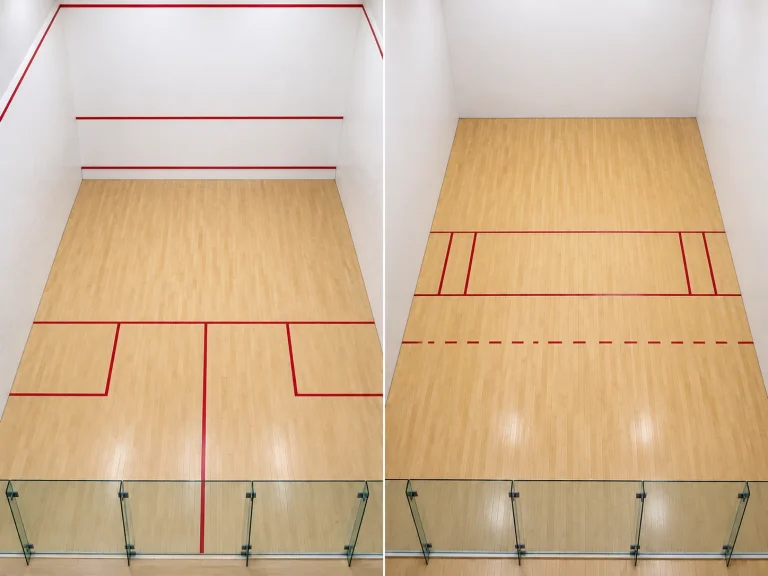
The tin, out line, front wall and service boxes are not just markings players need to memorize—they are important parts of the court system. Consistent playing surfaces, clear visibility and safe clearances all contribute to a better playing experience. If you are planning a squash facility, explore LDK Squash court systems for options suited to different venues and project requirements.
7. Lets: When a Rally Is Replayed
A let means the rally is replayed. Neither player receives a point, and the server serves again from the same service box.
The most common reason for a let is interference. For example, you may be ready to play the ball but your opponent is in the way. If you could reasonably have reached and returned the ball, and neither player clearly caused the problem, the referee may allow a let.
If you need a let, stop safely and ask promptly—many players say, “Let, please.” Do not continue through a dangerous situation just to finish the rally.
8. Strokes: When You Win the Rally Without Hitting
A stroke awards the rally to the obstructed player. It is different from a let because the rally does not restart.
A stroke may be awarded when an opponent does not make a genuine effort to clear the ball, blocks a reasonable swing, or prevents a player from making a shot that would likely have been a winner. Safety can also justify a stroke.
Players must make every reasonable effort after their shot to clear space. That means allowing the opponent to see the ball, reach it, swing safely, and play the ball to any part of the front wall.
9. Let, Stroke, or No Let?
Interference decisions depend on the exact situation. A useful beginner-friendly guide is:
- No let: There was no meaningful interference, or the player could not have made a legal return anyway.
- Let: There was interference, but both players acted reasonably and the player could have made a legal return.
- Stroke: The interference prevented a reasonable shot, the opponent failed to clear, or continuing would create a safety problem.
Do not use “let” as a general request for a second chance. The player asking must have a genuine opportunity to reach and return the ball. If there is a risk of hitting someone with the racket or ball, stop and prioritize safety.
10. Common Beginner Mistakes
- Standing too close to the ball: Give yourself room for a controlled swing and a safe follow-through.
- Failing to clear the “T”: After your shot, move efficiently toward the central T position without blocking your opponent.
- Arguing every call: In a friendly match, replay an unclear point and continue. In a tournament, the referee makes the final decision.
- Serving from the wrong box: Remember to alternate boxes when you continue serving after winning a rally.
- Hitting too hard too early: Length, height, and accuracy usually matter more than power for beginners.
- Ignoring safety: Never swing when your opponent is in the danger zone. Stop and ask for a let if necessary.
11. A Simple Beginner Match Routine
- Agree on the match format, such as best of three games to 11.
- Decide who serves first.
- The server chooses a service box and waits for the receiver to be ready.
- Play each rally until a player misses, hits tin, hits out, fails to return the ball, or a let/stroke is called.
- Announce the score before each serve.
- At the end of a game, take the agreed break, then continue until the match is decided.
12. Quick Rules Checklist
Before your first game, remember these essentials:
- Every rally is worth one point.
- Games normally go to 11, with a two-point margin at 10–10.
- The server alternates service boxes while retaining the serve.
- Hit the front wall above the tin and below the out line.
- Strike the ball before its second bounce.
- Clear the opponent’s path, vision, and swing.
- A let replays the rally; a stroke awards the rally.
- When in doubt, stop safely and ask for a ruling.
Frequently Asked Questions
How many points are in a squash game?
A squash game is normally played to 11 points. At 10–10, play continues until one player leads by two points.
Can you volley in squash?
Yes. You can hit the ball before it reaches the floor, provided the return is legal and the ball reaches the front wall above the tin and below the out line.
What is a let in squash?
A let means the rally is replayed because interference affected the player’s opportunity to make a legal return, without a clear reason to award the rally to either player.
What is the difference between a let and a stroke?
A let replays the rally. A stroke awards the rally to the obstructed player, usually when the opponent failed to clear, blocked a reasonable swing or created a safety issue.
How do you serve in squash?
Keep at least one foot inside the service box, strike the ball directly to the front wall between the service line and out line, and—unless volleyed—land it in the opposite quarter without touching a line.
Final Takeaway
Squash rules become much easier once you understand the flow: serve legally, return the ball before its second bounce, keep it between the tin and the out line, and make room for your opponent. Start with controlled shots and good movement rather than trying to hit every ball hard. With a few games, calls such as “out,” “down,” “let,” and “stroke” will become second nature.
Rule note: This beginner guide summarizes the core principles of current World Squash singles rules. Official competition rules and referee decisions take priority where a situation is disputed. Source: World Squash Officiating — Rules of Squash.
Planning a Squash Court?
Once you understand how the game is played, the next step is choosing a court system that suits your venue, budget and intended use. LDK Squash supports court projects for clubs, gyms, hotels, schools and other facilities.
Explore LDK Squash court systems or contact the LDK team to discuss your project requirements.
About LDK Squash
LDK Squash is a squash court manufacturer supplying court systems for professional facilities, clubs, gyms, hotels, schools and project partners.
B2B PROJECT SUPPORT Share your floor plan, site dimensions and intended court configuration. LDK can help review the spatial brief and prepare the next specification step.Planning a new squash venue?