
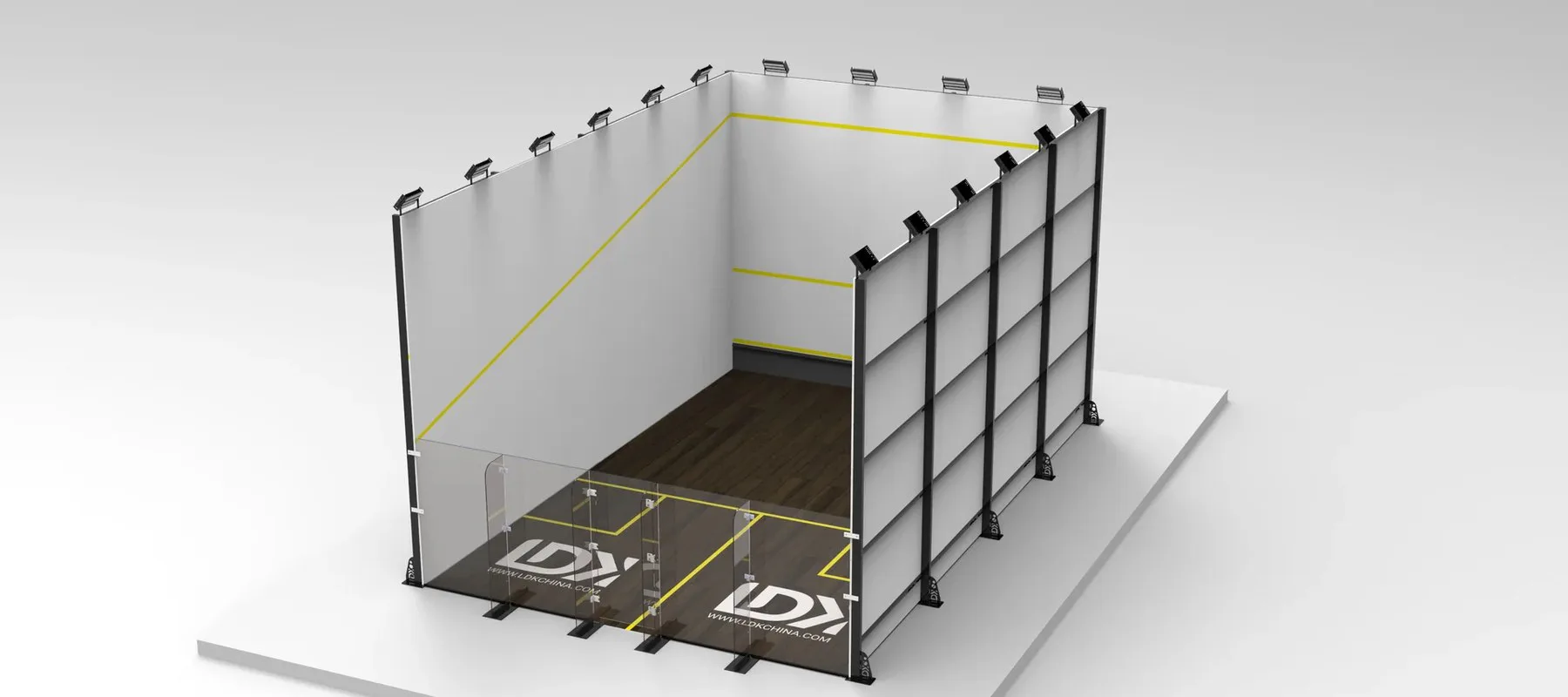
Squash court system
Dismountable High-Grade Wood Sports Floor System
Dismountable maple sports wood flooring on 30 mm LVL joists and 20 mm pads, 84 mm build-up, for tournament and multi-use halls. Model LDK25W05.
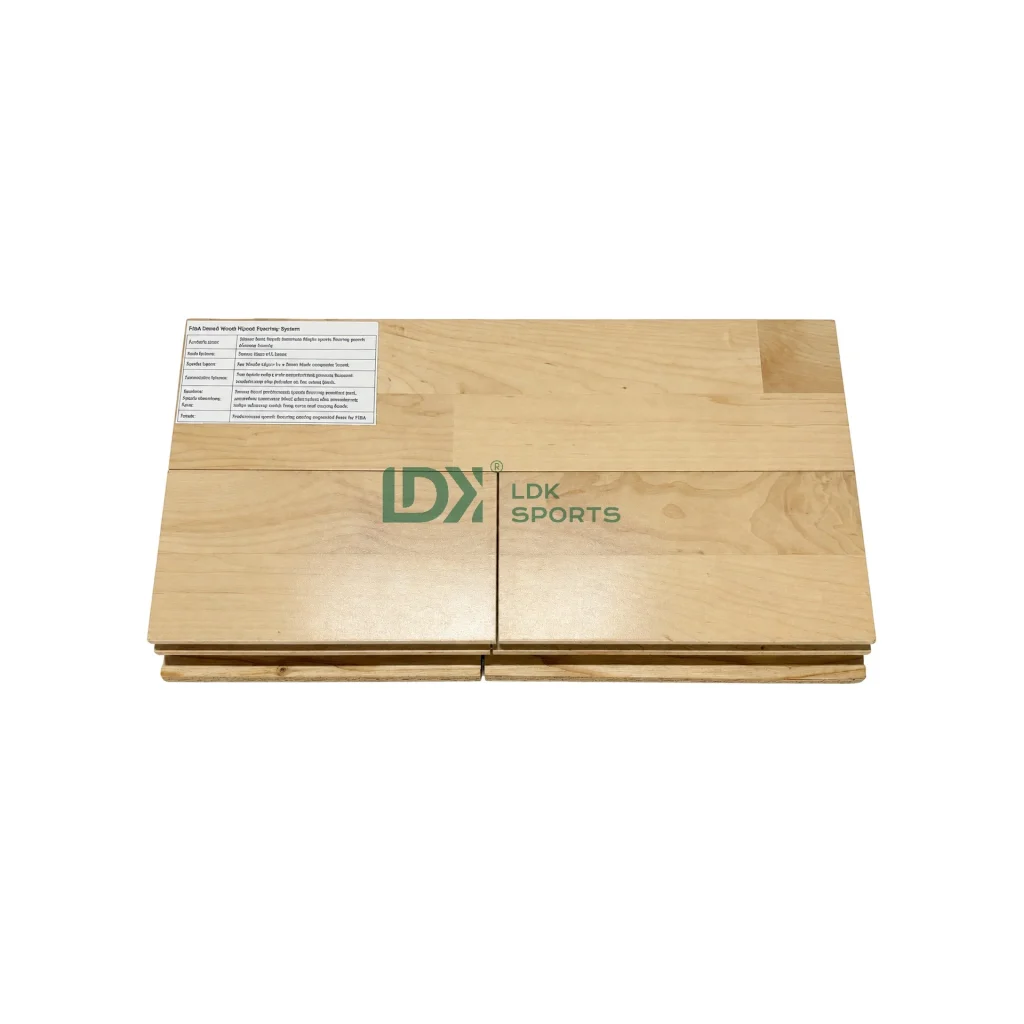
Product information
Specification at a glance
Dismountable maple sports floor; 84 mm build-up on 30 mm LVL joists with 20 mm pads
Model
LDK25W05
System type
Dismountable modular wood sports floor
Total build-up
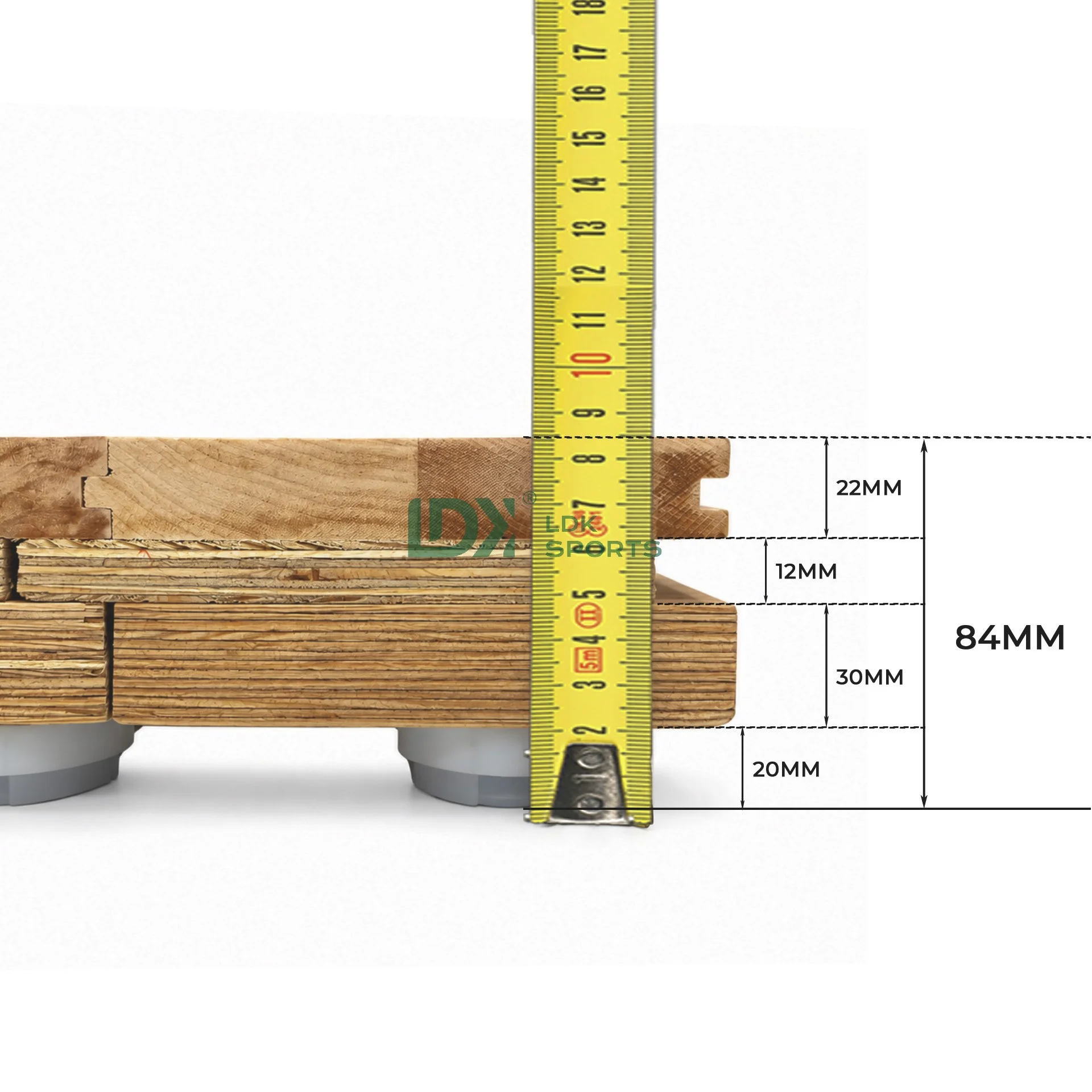
84 mm — 22 mm surface, 12 mm middle layer, 30 mm joist, 20 mm pad
Connection
Interlocking grooves plus steel pull tabs
Application
Competition and professional training
Reusable
Lays, lifts and re-lays between events
Key features
Dismountable modular build — courts can be laid, lifted and stored without damaging the modules 22 mm maple sports surface with factory-applied professional sports coating 30 mm LVL main joists for stiffness across tournament loads 12 mm composite middle layer tying the surface to the joist frame 20 mm resilient pads under each module for shock absorption and stable elasticity Interlocking grooves plus steel pull tabs for fast, tool-light assembly and release 84 mm total build-up, checked against door thresholds and floor transitions
Technical information
Layer schedule
| Surface layer | 22 mm maple sports flooring panels |
|---|---|
| Joist system | 30 mm main LVL joists |
| Middle layer | 12 mm composite board |
| Resilient pads | 20 mm shock-absorbing pads |
| Connection system | Interlocking grooves between modules plus metal pull tabs |
| Finish | Professional sports flooring coating |
| Total build-up | 84 mm |
Assembly and dismantling
Check slab flatness and the 84 mm finished height against thresholds and adjacent floors. Lay modules from a fixed datum line so court markings land on the planned grid. Engage the interlocking grooves, then tension the pull tabs to close the joints. Check level across the court after every few rows rather than at the end. For dismantling, release the tabs in reverse order and lift modules without levering against the surface.
Dismountable floor system
Dismountable High-Grade Wood Sports Floor System
A competition-grade maple floor that can be laid for an event and lifted again afterwards. Modules interlock through machined grooves and steel pull tabs, so a hall can return to its everyday use between tournaments.
Overview
Most sports floors are decided once: the slab is prepared, the substructure is fixed down, and the surface stays there for its service life. A dismountable system works the other way round. The substructure, joist frame and maple surface travel together as a module, which is laid over the existing floor and joined to its neighbours. When the event ends, the modules come up and the space goes back to whatever it was.
Product gallery
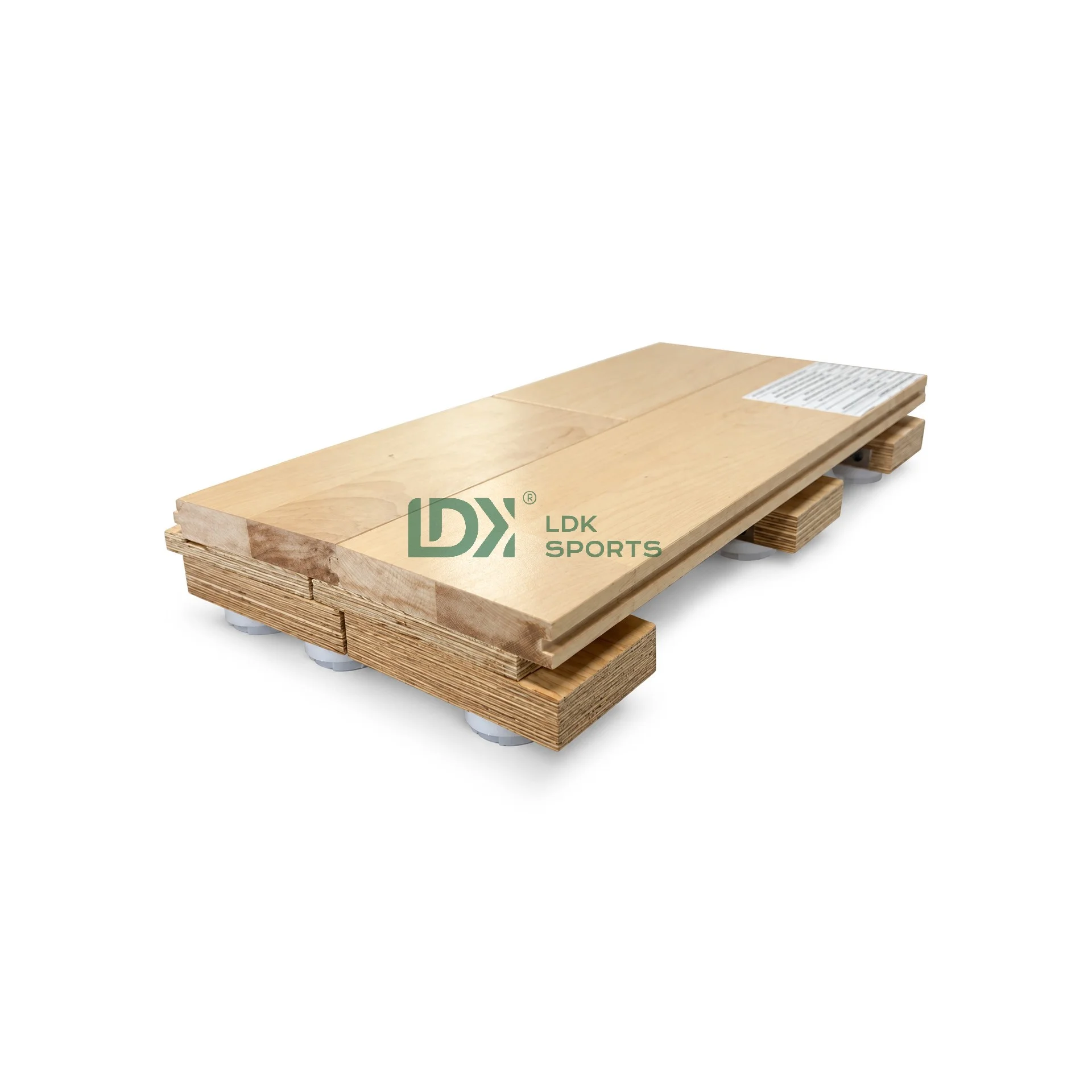
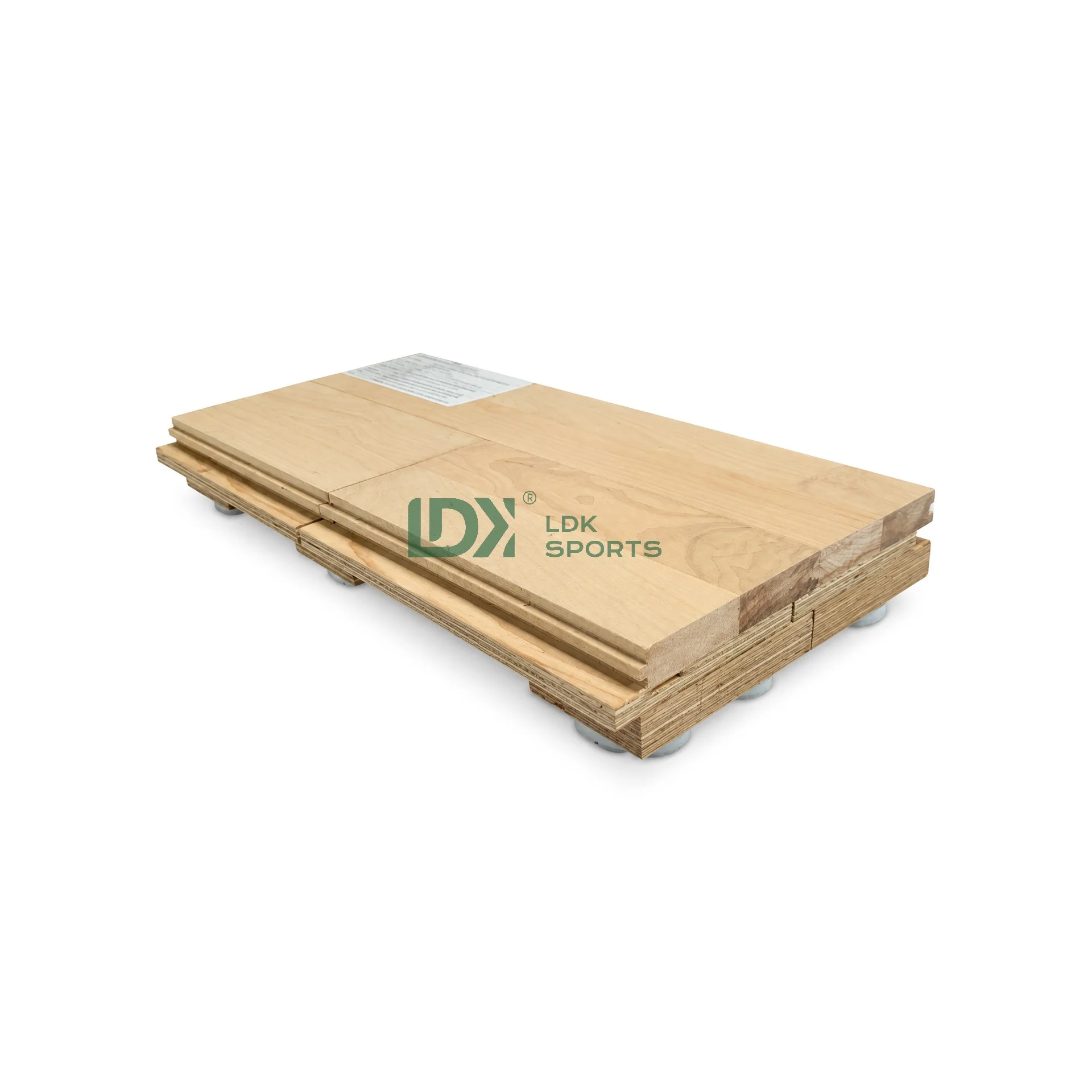
The system in ten views
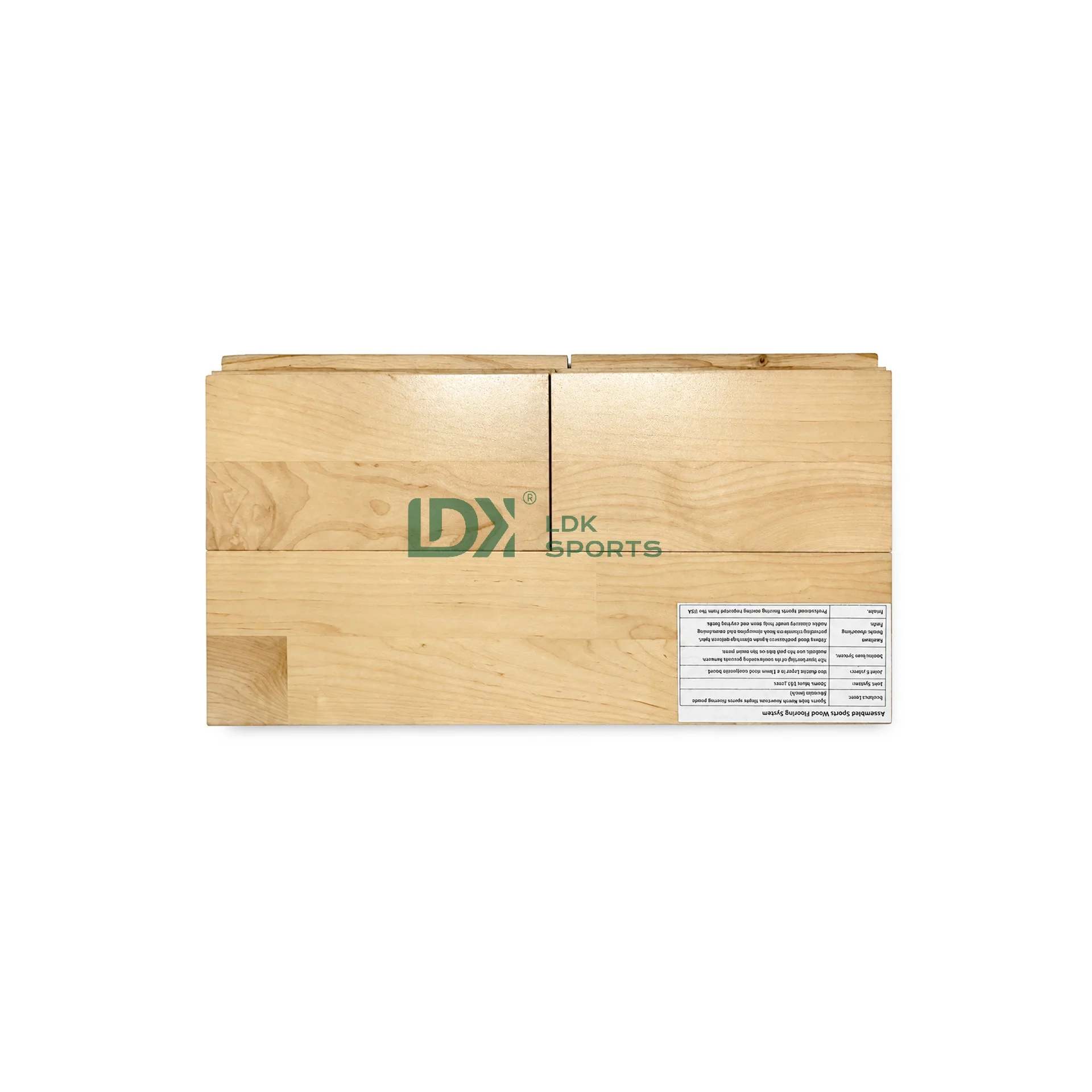
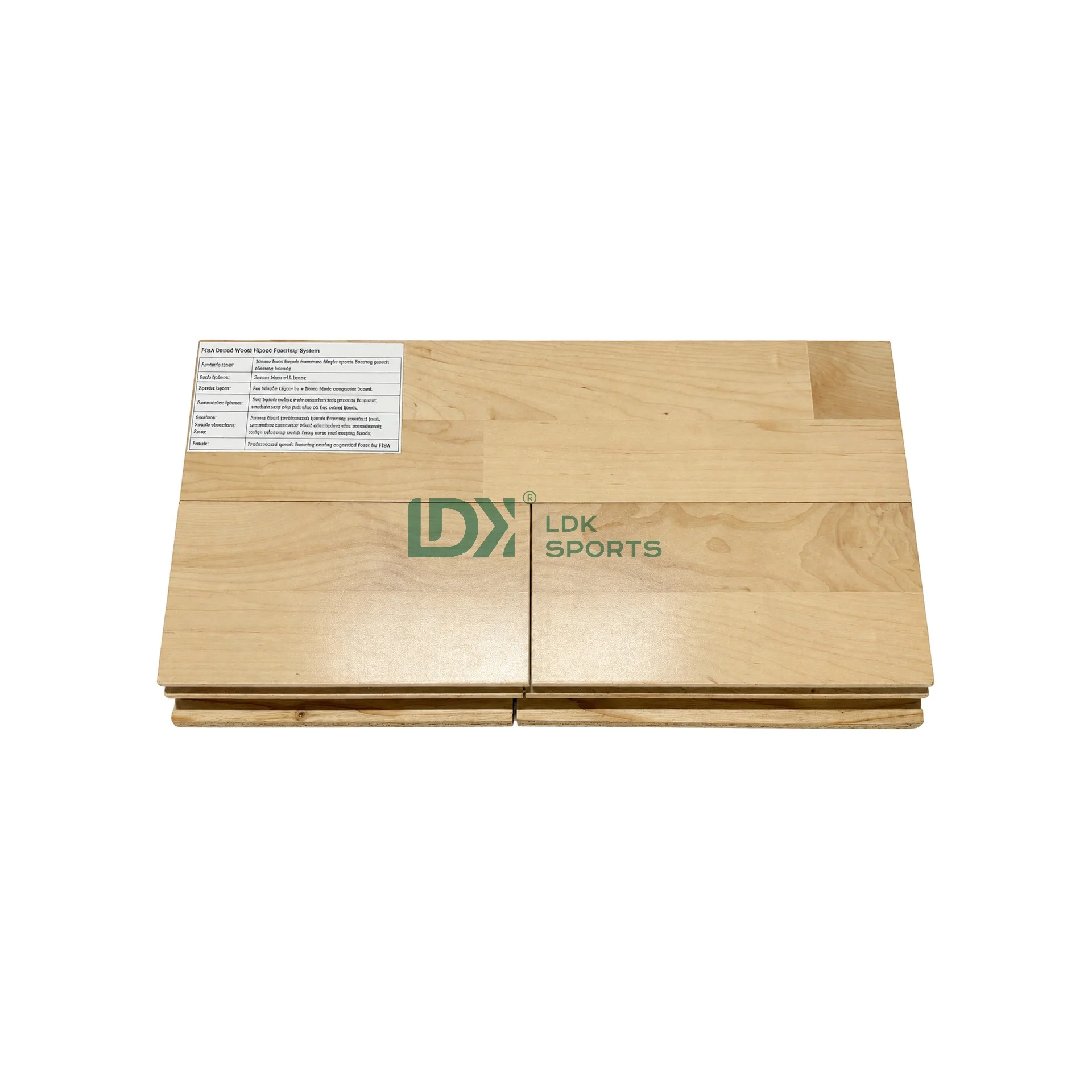
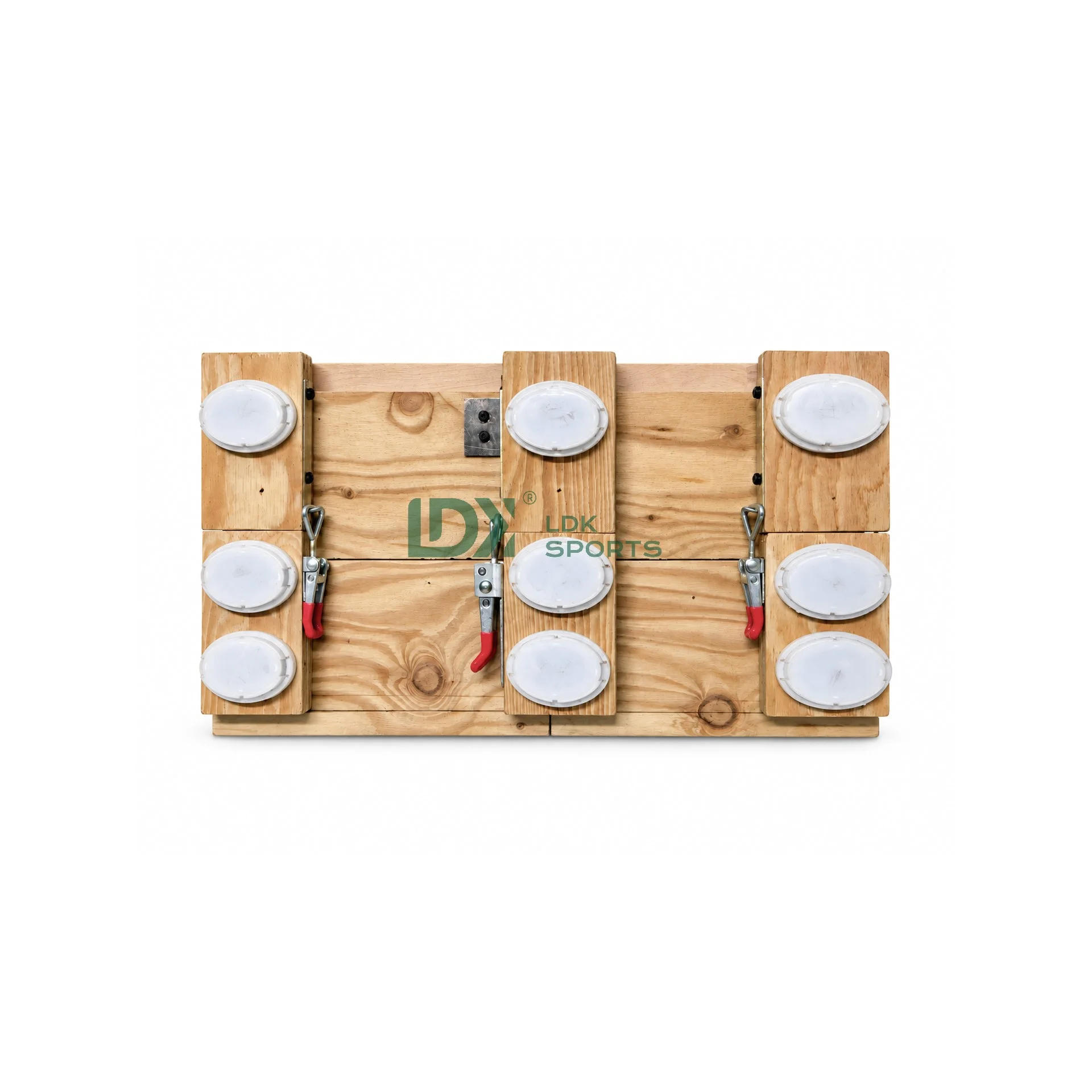
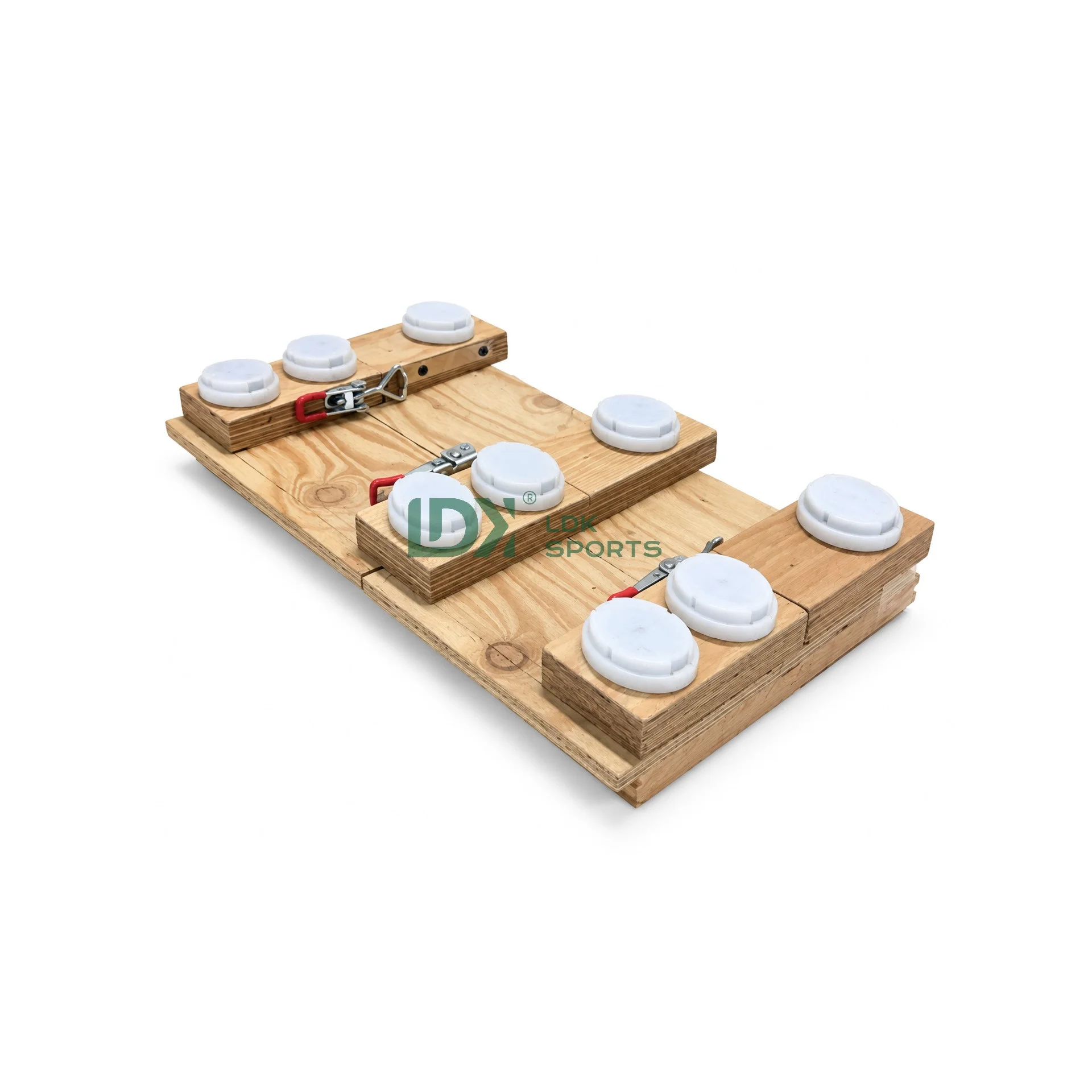
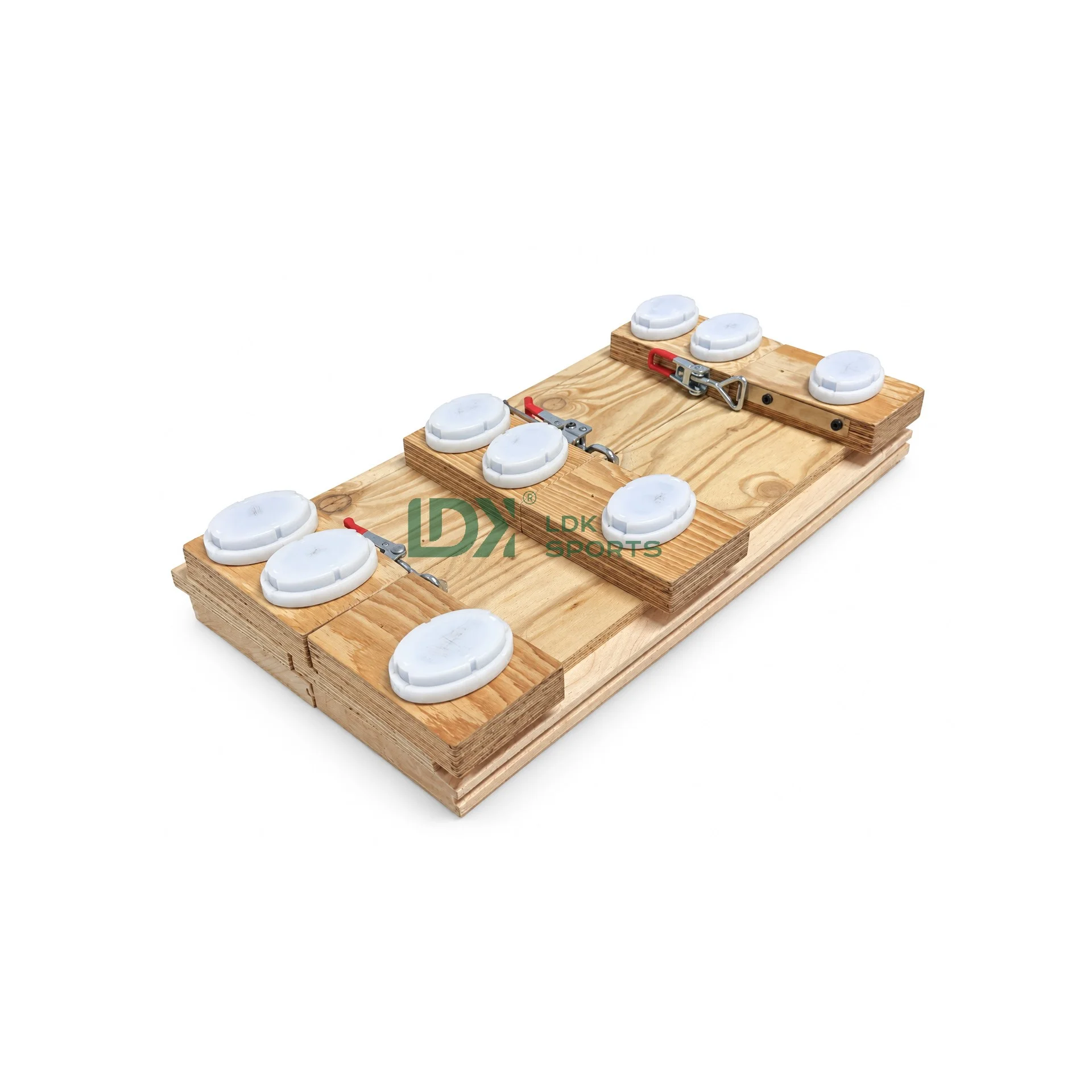
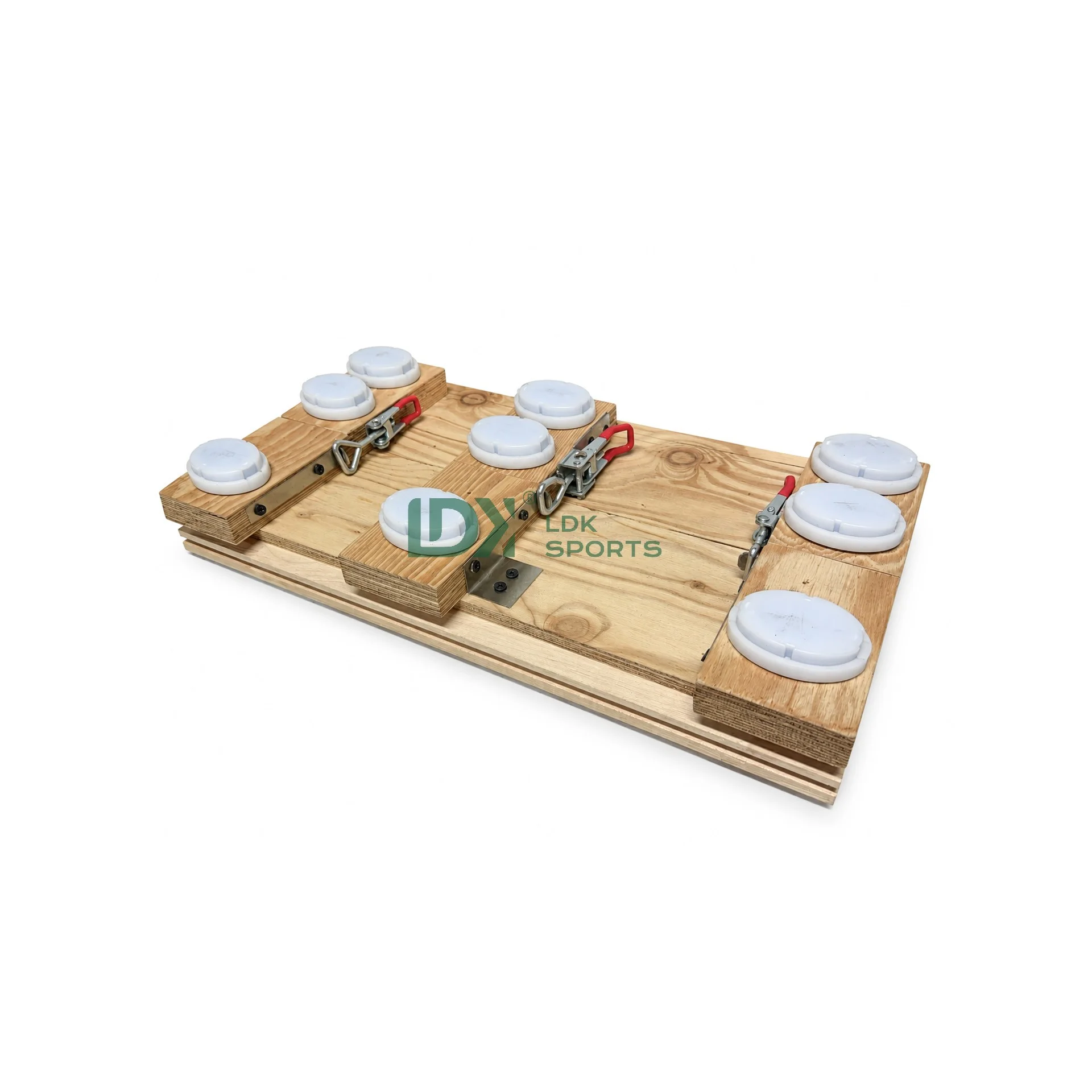
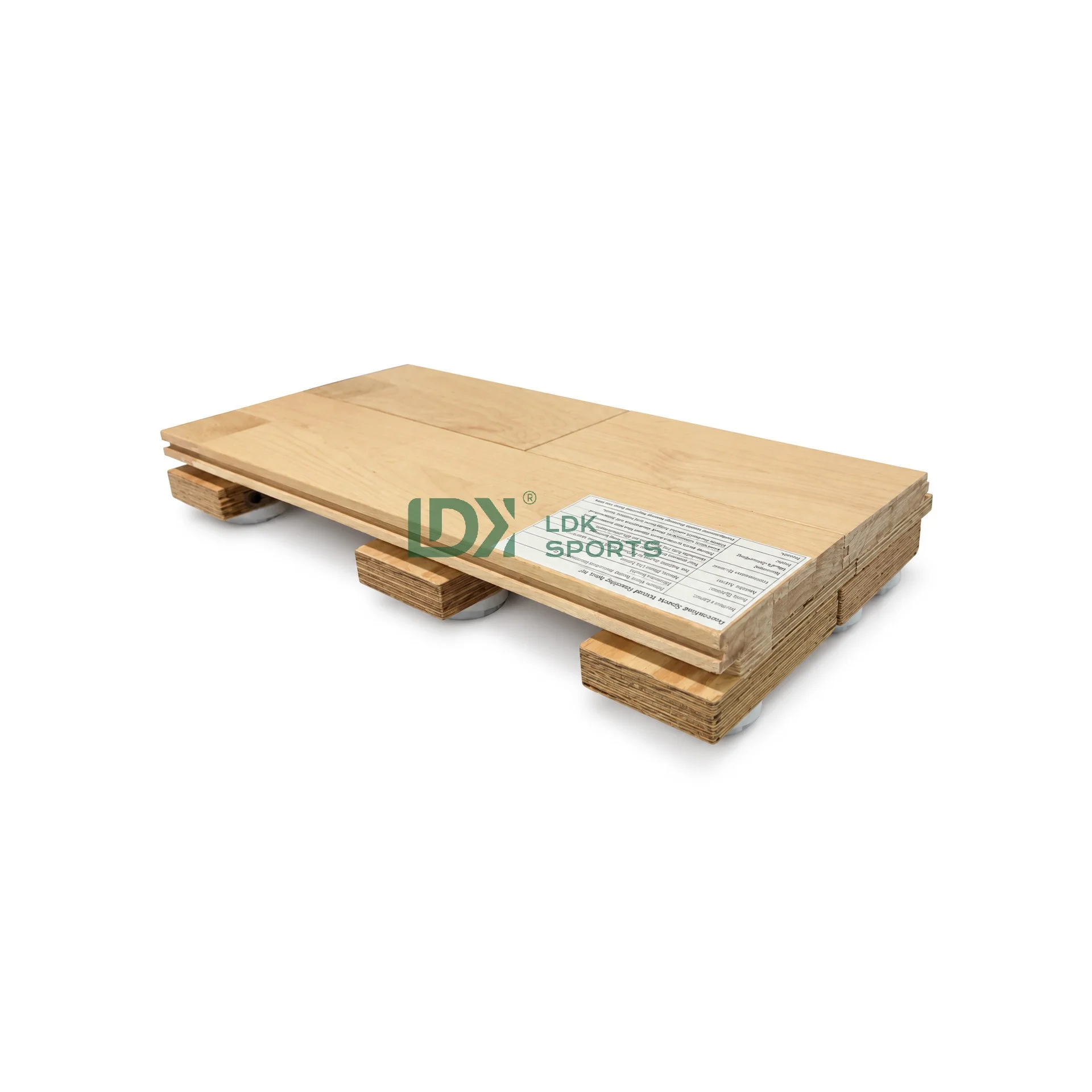
Surface, module edges, the interlocking connection and the pad-and-lever detail underneath. Click any image to open it full size.
What “dismountable” changes for a venue
A dismountable floor is a piece of sports equipment as much as it is a building element. It is owned once and used repeatedly: laid for a tournament week, lifted for a concert, re-laid the following month. That changes the brief in three places — the connection has to survive repeated cycles, the modules have to stack and travel without damaging the surface, and the finished height has to match whatever the venue uses the rest of the year.
It also changes the economics. A fixed floor is written off across its service life in one location; a dismountable floor can serve several halls or events, which is why arena operators, exhibition centres and multi-sport venues specify them instead of a permanent installation.
The 84 mm build-up, layer by layer
The measured section of the system is 84 mm. Each layer has a defined job:
- 22 mm maple surface — the playing face. Thick enough to hold court markings and take repeated re-coating without sanding through.
- 12 mm composite middle layer — ties the surface to the joist frame and spreads point loads between joists.
- 30 mm LVL main joists — deeper than a fixed-floor joist, because the module has to be stiff enough to be lifted, transported and re-laid without the frame racking out of flat.
- 20 mm resilient pads — the elastic element. They sit under the module frame, absorb impact and settle the module onto the floor below.
The overall depth is the number most projects get caught on: 84 mm has to clear door leaves, threshold strips, retractable seating and any floor-level power or data boxes. That is confirmed on drawings before manufacturing.
The connection is the real engineering
A fixed floor only has to hold together once. A dismountable floor has to close, tension, resist movement during play, then open again without losing alignment. This system does it with two parts working together: machined interlocking grooves along the module edges, and steel pull tabs that tension the joint once the modules are engaged.
The practical result is a joint that closes by hand rather than by force, and a court that can be taken up in the reverse order it was laid. No adhesive, no fixings into the slab, nothing to make good afterwards.
Where a dismountable floor earns its cost
Arenas and multi-purpose halls that host a tournament season and something else for the rest of the year. Exhibition and broadcast venues that need a court for a fixed run of days. Training centres that want a competition surface without committing the building to it. Schools and community facilities where the same room has to work as a hall, a canteen or an exam space.
If the court is permanent and the slab is available, a fixed system is usually the better value — the single-joist floor covers that case. The dismountable option is for the venue whose floor has to move.
Questions buyers ask
Dismountable sports floor FAQ
How long does it take to lay or lift a court?
It depends on court count and crew size rather than on the system alone. The modules are handled by two people, and the pull tabs are released by hand. For planning purposes, ask for a lay-down rate per court at quotation stage and add time for markings and final checks.
Does it need fixing into the slab?
No. The modules sit on their own resilient pads and are held together by the interlocking connection. That is why the floor can be removed without making good the slab underneath.
Can it be used outdoors or in a temporary structure?
The system is specified for indoor competition use. For a temporary or semi-permanent venue, the deciding factors are the base flatness, moisture and protection from weather — those are reviewed per project rather than assumed.
Is this system FIBA approved?
LDK supplies the system under its FIBA dismountable wooden flooring designation. Certification and test reports are issued per product and per project, so ask for the current documents with the quotation rather than relying on a label on the module.
What happens to the floor between events?
Modules are palletised and stored flat, indoors and dry. The maple face is protected in transit; the frames stack without loading the surface panel.
Related systems
Other floor and court options

Specify the floor
Tell us how often the court has to move
Send the court size, the events calendar and the space the modules will be stored in. We will confirm the module grid, the 84 mm build-up against your thresholds, and a lay-down routine your crew can repeat.